

James Johnson
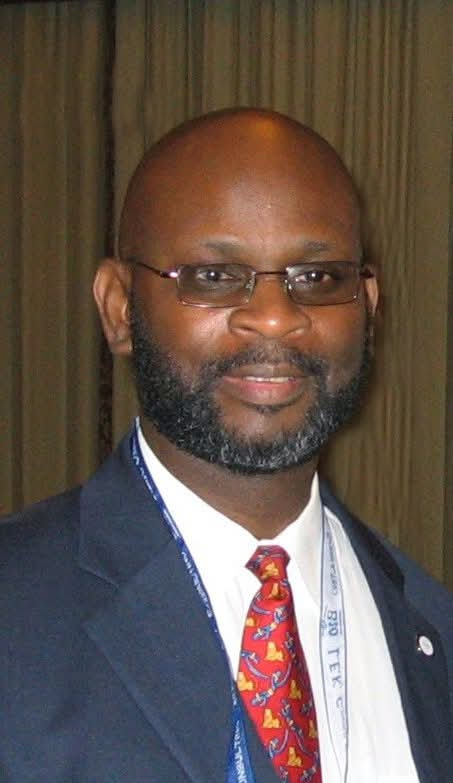
“It was an expectation... you owe it to not only yourself and your family, but your community to make it a better place.”
— James Johnson
About
James Johnson is a native of Oklahoma City whose family lineage is deeply embedded in the civic, medical, and entrepreneurial history of the city’s Black community. His paternal family settled in the Stella and Little River area in the 1890s after migrating from Texas. His maternal lineage, including his grandfather Walter J. Edwards, arrived around the time of Oklahoma statehood in 1907.
Johnson is the grandson of the founders of Edwards Memorial Hospital and the developers of the Edwards Edition housing subdivisions — two landmark efforts that expanded healthcare access and home-ownership opportunities for Black residents during segregation. Raised in what he describes as a tradition of “intentional fortitude,” Johnson inherited a multi-generational commitment to community advancement.
A proud fourth-generation graduate of Frederick A. Douglass High School, Johnson later served more than twenty years as President of the Douglass Alumni Association, preserving institutional memory and alumni engagement for future generations.
His Story
James Johnson’s story is inseparable from Oklahoma City’s story.
He reflects on growing up in a family where achievement was not individual — it was communal. Education, business ownership, and civic engagement were not optional pursuits; they were expectations. His grandparents’ decision to build Edwards Memorial.
Events
1969 Oklahoma City Sanitation Strike
Participated in the Douglass High School student walkout to City Hall.
1948 Opening of Edwards Memorial Hospital
Family legacy tied to the founding of a Black-built medical institution.
Urban Renewal Era (1960s–1970s)
Witnessed demolition and displacement in Northeast Oklahoma City.
World War II Homecomings & Great Depression Reflections
Family narratives tied to broader national transitions.
Locations
Frederick A. Douglass High School
A fourth-generation graduate and later Alumni Association President, Johnson views Douglass as a cultural and leadership institution.
Edwards Edition / Edwards Heights
A residential subdivision developed by his grandparents to provide quality housing for Black families during segregation.
1612 NE Grand Boulevard
Location connected to family and community life.
Mistletoe Shoe and Repair Company
Operated by Johnson’s father, recognized as the first known Black-owned business in downtown Oklahoma City.
216 NE 2nd Street (Tenement House)
Represents earlier forms of housing density before later residential developments.
Contributions
- Preserved and advanced the legacy of Frederick A. Douglass High School through more than two decades of alumni leadership.
- Continues to interpret and protect the civic history of Edwards Memorial Hospital and Edwards Edition.
- Serves as a living bridge between pre-statehood migration narratives and modern-day Oklahoma City.
- Provides firsthand testimony connecting education, entrepreneurship, housing development, and Civil Rights activism.
In His Own Words
- “I have a very good friend… he is fond of saying, ‘I learned everything I needed to know in life at Douglass High School.’”
- “We realize, not only in Oklahoma City… but throughout the nation, when interstate highways were being built, the most common place for them to cut through a community was in our community.”
- “…regardless of what happens to me today, if the Lord allows me to wake up tomorrow… then I can do something else.”
Archival Materials