

Carolyn Filson
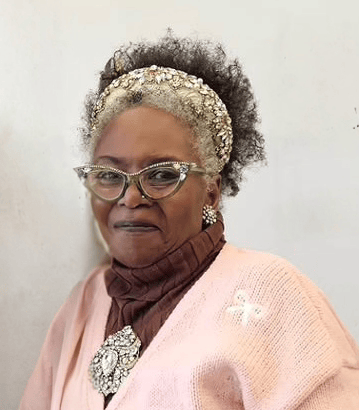
“I learned acceptance... people are going to be people, and you can’t change them.”
— Carolyn Filson
About
Carolyn Filson is a lifelong resident of northeast Oklahoma City whose oral history centers on family legacy, community cohesion, urban renewal, and the preservation of Black history. Born during segregation at St. Anthony Hospital, she was raised in a tightly connected family network. on Northeast Park Place, where her father, grandparents, aunt, and uncle all lived within walking distance of one another. Filson describes her childhood as safe, joyful, and community-oriented, recalling neighbors who watched out for one another and children who freely played throughout the neighborhood.
Her Story
Carolyn Filson is a lifelong resident of northeast Oklahoma City whose family history reflects the deep roots of Black community life, migration, activism, and resilience in Oklahoma. Born at St. Anthony Hospital during segregation, Filson grew up in a close-knit multi-generational household on Northeast Park Place surrounded by extended family members who helped shape her understanding of community, safety, and collective care. Her grandparents, who migrated to Oklahoma from Louisiana and Tennessee, first settled in Guthrie before later moving to Sandtown and eventually northeast Oklahoma City.
Filson attended Culbertson Elementary School, F.D.Moon Junior High School, and Frederick A. Douglass High School, following in the footsteps of her father and his siblings. Her father, Leslie Leon Filson, was the first Black detective in Oklahoma City. Through his work in law enforcement during segregation and the civil rights era, Filson witnessed firsthand the challenges Black officers faced navigating racism, public service, and community responsibility. Though she did not fully understand the significance of his role as a child, she later came to recognize the emotional burden and courage required of him as a Black detective working in a segregated city.
Raised within a strong network of churches, schools, clubs, and neighborhood institutions, Filson remembers northeast Oklahoma City as a vibrant and supportive community shaped by Black businesses, educators, civic leaders, and cultural organizations. She participated in church choir, piano lessons, ballet, acting classes, and youth programming while growing up in the 1950s and 1960s. Her memories of institutions such as Butler’s Barbecue, the Jewel Theater, Church of the Redeemer, and neighborhood parks reflect the rich social life that once defined the east side before urban renewal projects displaced families and fractured long-standing community networks.
After graduating from high school, Filson attended college at the University of Oklahoma in Norman, Oklahoma, where she later built a career in social work and drug and alcohol rehabilitation, working in the field for more than twenty-five years. In retirement, she briefly pursued a career in real estate before dedicating more time to preserving family and community history. Through oral history work with the African American HOPE Plaza project, Filson continues to document the stories, photographs, institutions, and experiences that shaped Black life in northeast Oklahoma City.
Events
Integration and Redlining
Filson grew up within a community geographically confined by the 23rd Street racial boundary. As a child and into young adulthood she witnessed the early, tentative steps toward integration through the support of civil rights leaders like her father and white neighbors.
Urban Displacement (1970s)
Filson describes the event as a pivotal force that displaced her family to the Hefner Road area and fractured the cohesive social and cultural networks of her childhood, leaving behind vacant lots and demolished homes.
Growth of Black Law Enforcement in Oklahoma City
Filson’s father, Leslie Leon Filson was OKC’s first Black detective. He paved the way for future officers while serving as a courageous mentor and protector in the segregated Eastside community.
Locations
Northeast Oklahoma City
Born and raised in northeast Oklahoma City, where she experienced the strength of Black community institutions, family networks, churches, schools, and businesses that shaped her identity and lifelong commitment to preserving local history.
St. Anthony Hospital
Born at St. Anthony Hospital during the era of segregation, making it the starting point of her life story and a reminder of the racial barriers Black residents faced in Oklahoma City.
Northeast Park Place
Growing up on Northeast Park Place in a multigenerational household, Filson developed her understanding of family support, neighborhood solidarity, and collective care within the Black community.
Guthrie, Oklahoma
First Oklahoma settlement for Filson’s grandparents after migrating from the South, representing an important early chapter in her family’s journey and establishment in the state.
Sandtown
Her grandparents later lived in Sandtown, a historic Black community that served as an intermediate stop before the family eventually settled in northeast Oklahoma City.
Culbertson Elementary School
Attended Culbertson Elementary, where she began her formal education within the predominantly Black educational institutions that served northeast Oklahoma City during segregation.
F.D. Moon Junior High School
Continued her education while participating in the close-knit school community that nurtured Black students and future leaders.
Frederick A. Douglass High School
Graduated from Douglass High School, a historic center of Black education and community pride where she followed family traditions and developed lasting ties to northeast Oklahoma City.
Church of the Redeemer
One of the religious institutions that played a significant role in her upbringing, providing spiritual guidance and opportunities for community engagement.
Butler’s Barbecue
Remembered as an important Black-owned business and gathering place that contributed to the vibrant social and cultural life of northeast Oklahoma City.
Jewel Theater
One of the community landmarks Filson recalls from her youth, serving as a cultural and entertainment hub for Black residents.
Contributions
- Preserved and advanced the legacy of Frederick A. Douglass High School through more than two decades of alumni leadership.
- Continues to interpret and protect the civic history of Edwards Memorial Hospital and Edwards Edition.
- Serves as a living bridge between pre-statehood migration narratives and modern-day Oklahoma City.
- Provides firsthand testimony connecting education, entrepreneurship, housing development, and Civil Rights activism.
In Her Own Words
- “I feel like we got the best of life because we got to play... your neighbors would look out for you, and it was just a togetherness. You felt safe, you felt secure.”
- “My father was the first black detective here in Oklahoma City.”
- “I know that doing being in that role, being the first black detective, was much harder than he let on.”
- “What do you do when things are real hard? A lot of people just don't want to go through it, but he did.”