

Setbacks and Accidents
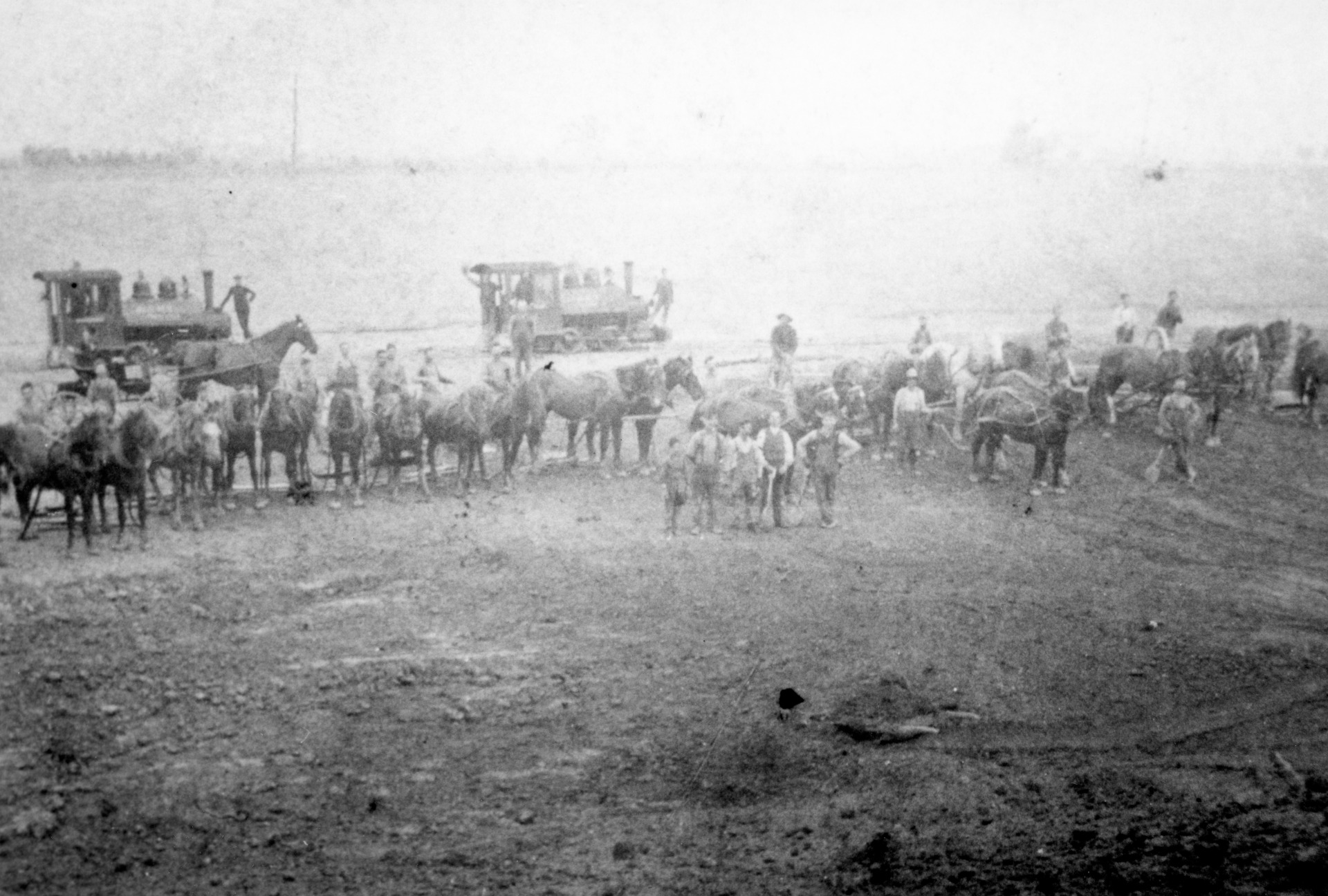
The canal’s construction proved more challenging than anticipated due to unfavorable weather conditions and the nature of the terrain. Over the seven years, contractors and workers encountered numerous obstacles, like stones and unstable ground, which was primarily composed of clay and silt resting on a sandy base. Although preliminary analyses and reports had noted these soil conditions, their impact on construction was underestimated, creating significant challenges.
This geological phenomenon caused substantial damage and numerous accidents, greatly slowing progress.
Landslides and collapses occurred regularly along the canal, often over large areas. One major incident took place on October 25, 1897, near Rang St-Emmanuel, where a 400-meter-long landslide swept away a 3,000-ton abutment meant to support one of the five swing bridges.
In response to the incident, engineers decided to level and reinforce the canal banks in the most problematic areas. Concrete retaining walls were also built and distributed along the route to stabilize the canal's banks.
-3vlxohk.png?alt=media&token=f28b675a-05de-4091-9df4-9d208d5dd244)