Running a Canal
During the navigation season, which runs from April to October, the Soulanges Canal operates day and night. Under the jurisdiction and responsibility of the federal government, it becomes a major employer for the region's population.
Each year, nearly 132 people are employed there, either permanently or temporarily. These seasonal jobs cover a wide range of skills, such as day laborers, carpenters, joiners, painters, mechanics, blacksmiths, warehouse workers, and office workers.
The canal's innovative operation also required the creation of new professions, often requiring specialized training acquired on-site, such as electricians, lock keepers, bridge operators, and even divers.
The superintendent, considered the canal's chief executive, was responsible for its management, administration, and supervision. His prestigious residence was located at Pointe-des-Cascades, between Chemin du Fleuve and the canal's south bank.
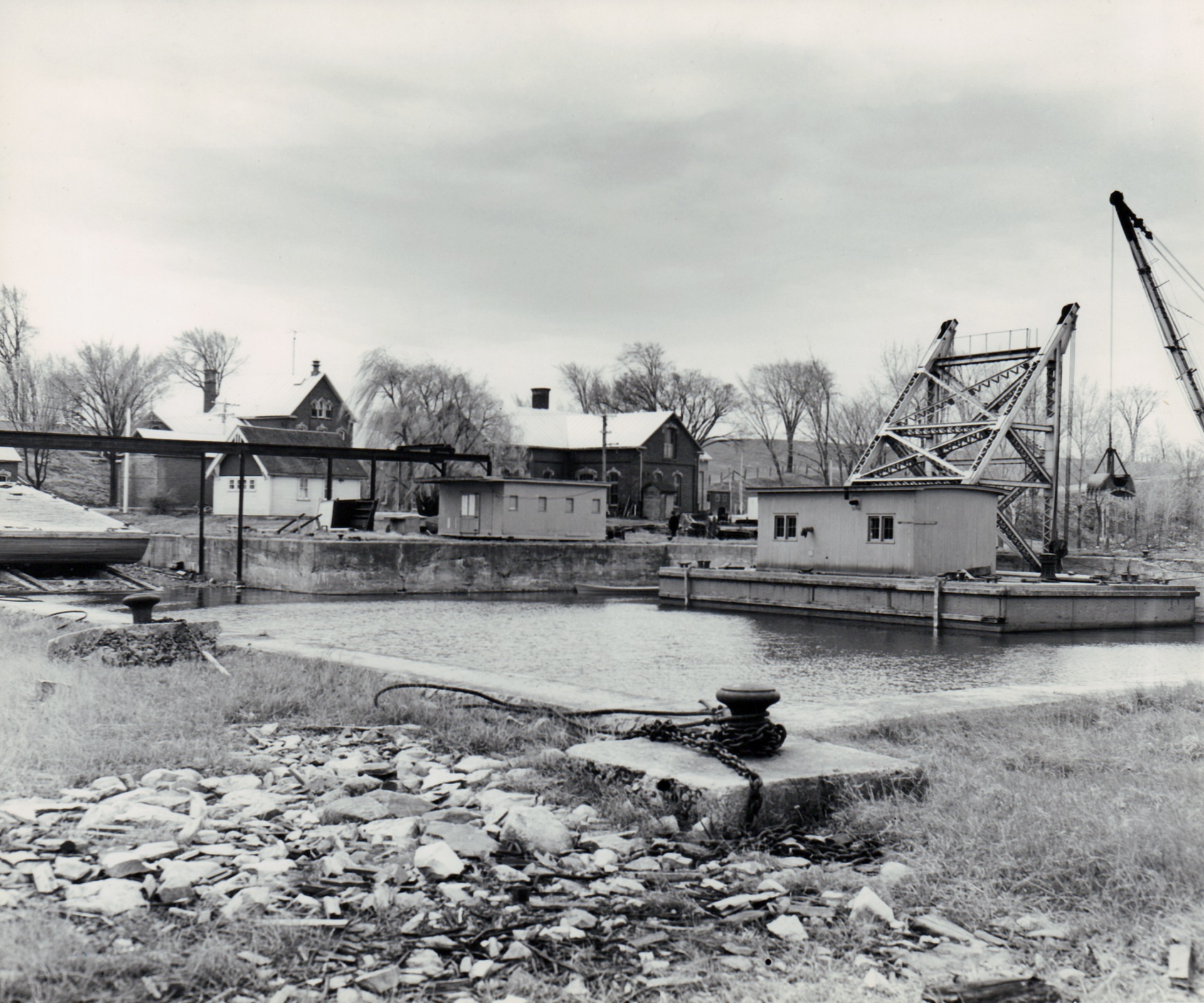
Opposite the house, a fixed pedestrian bridge provides access to the canal by spanning the regulating basin of lock no. 2.
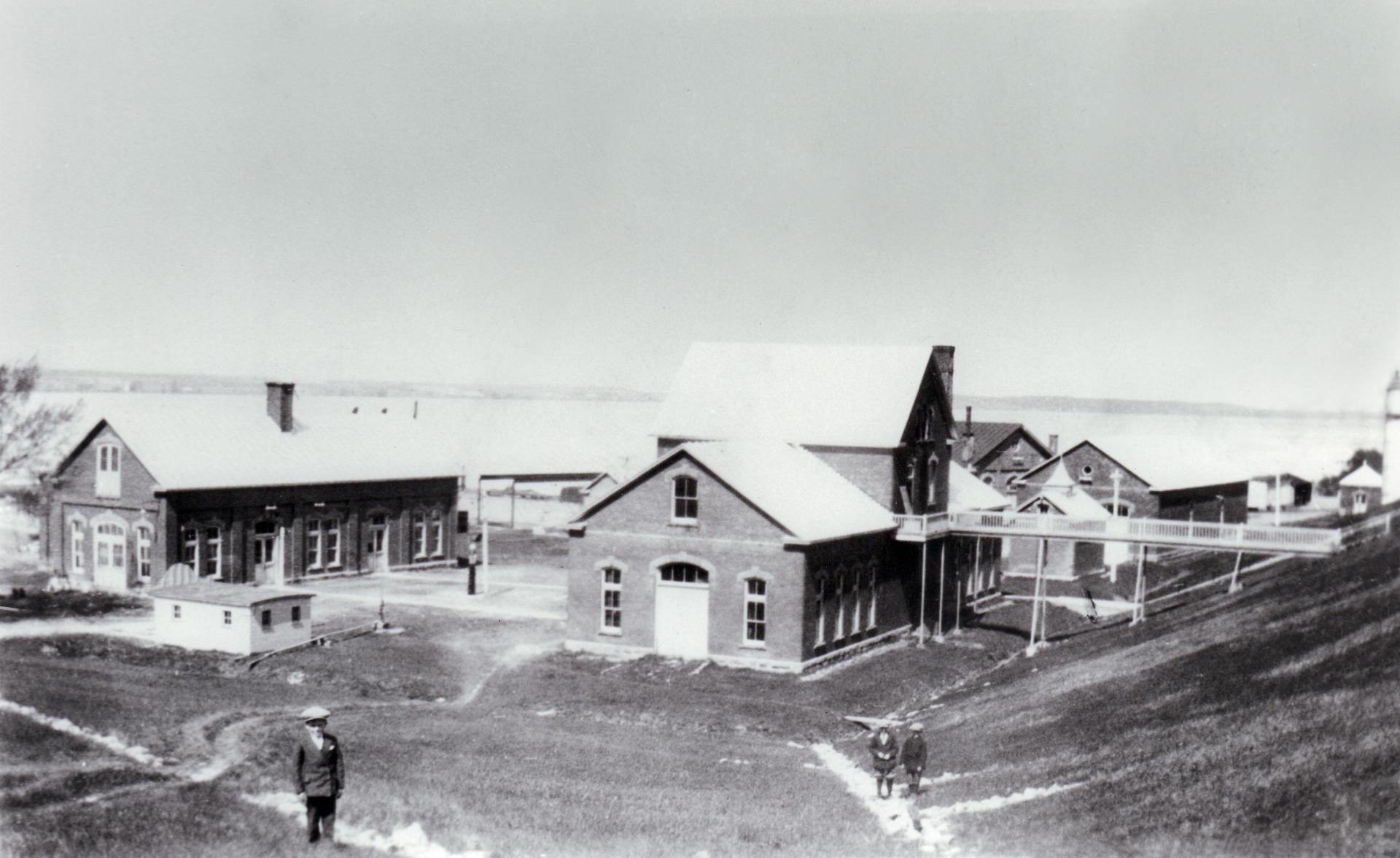
Workshops, warehouses, and administrative buildings are also located at Pointe-des-Cascades. The important statistics office is located at Coteau-Landing (Les Coteaux), where employees are responsible for compiling information on the number of ships using the passage, as well as their identification.
-3vlxohk.png?alt=media&token=f28b675a-05de-4091-9df4-9d208d5dd244)