

The First Canals
Under British rule, significant attention was given to the rapids in order to facilitate the passage and transportation of goods and travelers. The decision was made to construct canals to bypass the Cascades, Cedars, and Coteau-du-Lac rapids.
Between 1779 and 1783, five canals were built. The first was located in Coteau-du-Lac (1779-1781), while the remaining four were constructed at Pointe-des-Cascades: the Faucille Canal (1783), the Le Trou Canal (1783), the Rocher-Fendu Canal, which included a lock (1783), and the Petit-Rocher Canal, consisting of a rock embankment (1783).
These canals enabled the passage of flat-bottomed boats equipped with sails and maneuvered using poles. These vessels, designed for shallow-water navigation and transshipment, dominated river traffic until the advent of steamships.
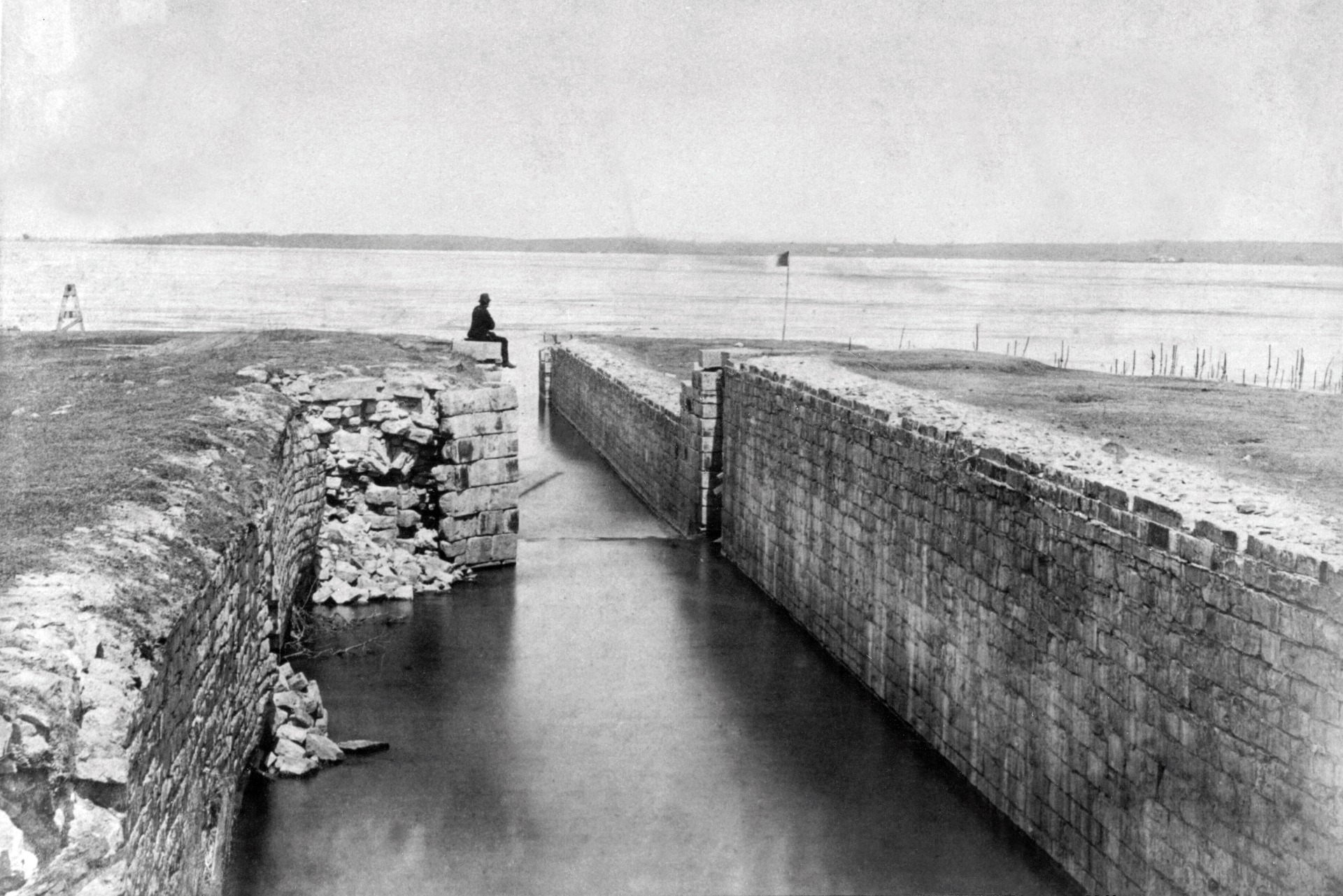
At the start of the 19th century, a decision was made to replace these canals with a larger and more efficient structure. Built in 1804, the Cascades Canal was 650 meters long and located at the base of the great Cascades hill. It directly connected the Ottawa River to the St. Lawrence River.
In 1845, the construction of the Beauharnois Canal, situated on the river's south shore in the heart of Salaberry-de-Valleyfield, marked the end of operations for the Cascades Canal. By 1899, the Beauharnois Canal ceased operations following the opening of the Soulanges Canal.
-egcc5si.png?alt=media&token=3cc1b8f6-3a75-44fd-ac3e-65b9c367949e)