
The Golden Age of the "Canallers"
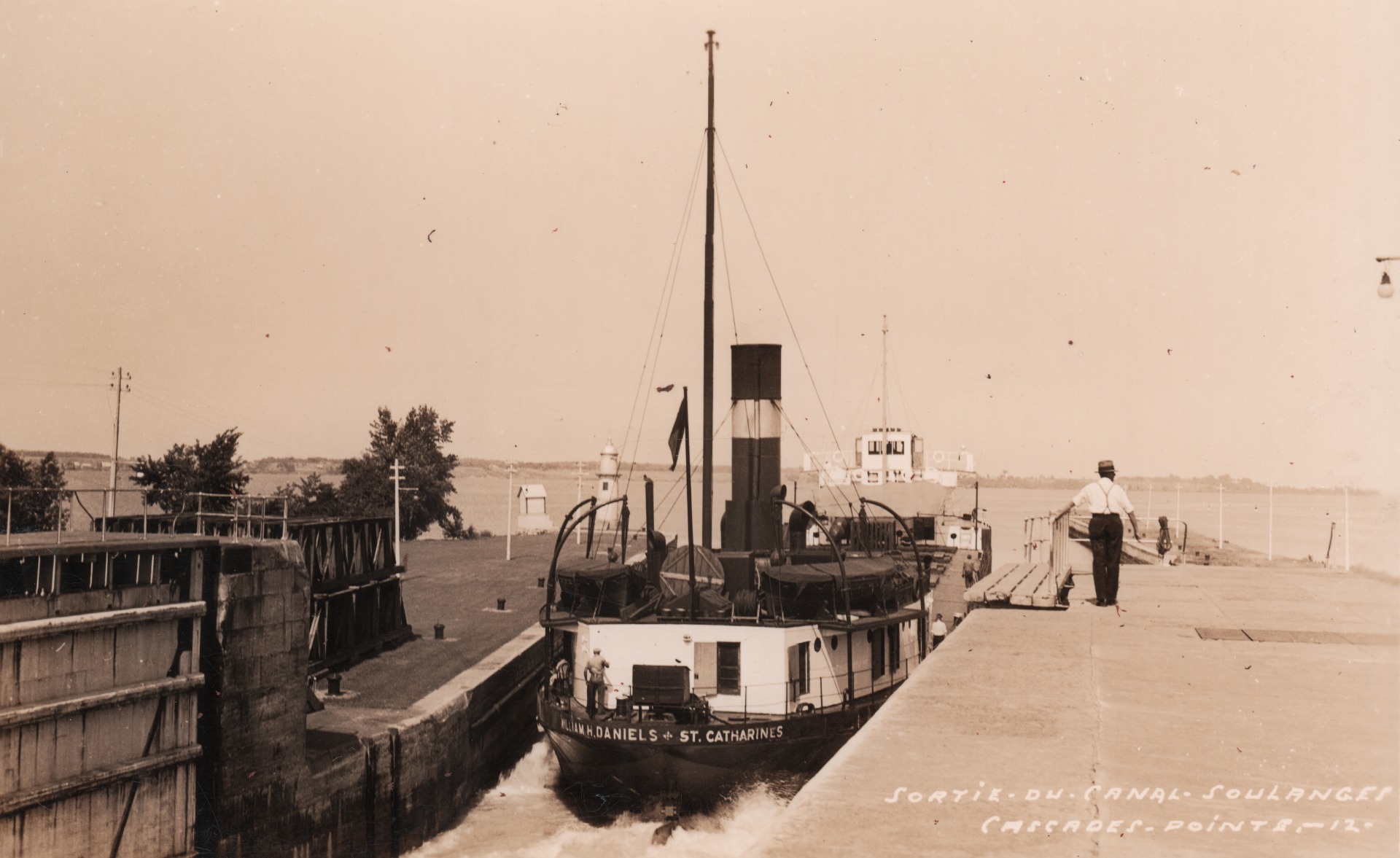
At the beginning of the 20th century, new boats appeared on the canal: the “canaliers,” a literal translation of the English word “canaller.”
These steamboats measured an average of 68.5 meters in length and 12.5 meters in width and were specially adapted to the dimensions of the canal network.
Although they were not designed for speed, but rather to maximize their size in relation to the dimensions of the locks, they covered the distance between Montreal and the Great Lakes in much less time, thanks to numerous technical innovations.
By 1935, for example, a round trip between Montreal and Chicago could be completed in less than 12 days.
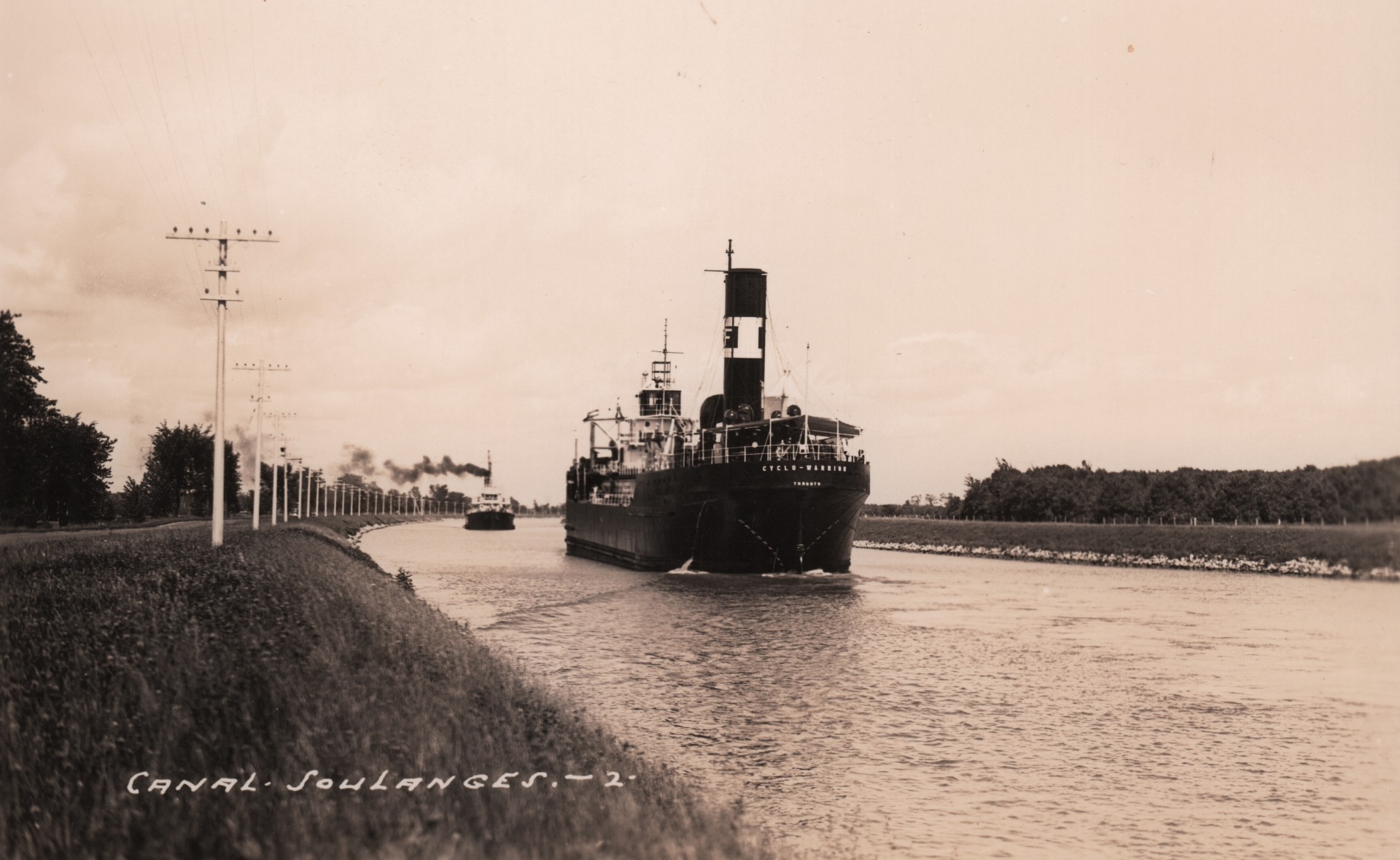
"Canallers" were primarily designed to transport large cargo loads, carrying up to 2,800 tons of iron ore or nearly 106,000 bushels of grain.
Their versatility allowed them to be converted into coal carriers, cement ships, tankers, or timber and pulp transporters.
Until 1935, "canallers" dominated the Soulanges Canal. However, progress did not slow down, and before long, they had to share the waterway with increasingly larger and faster ships.
-3vlxohk.png?alt=media&token=f28b675a-05de-4091-9df4-9d208d5dd244)