

A Pioneering Technological Achievement
This small hydroelectric plant, commonly known as the "Petit pouvoir des Cèdres", is one of four hydroelectric power stations built before 1900 that still exist in Quebec today. It stands as a remarkable testament to the early days of hydroelectric development in the province.
As early as 1890, when submitting his project proposal for the Soulanges Canal, engineer Thomas Munro (1831–1903), who oversaw this vast project, suggested building a small hydroelectric plant to electrify canal operations and enhance its efficiency.
Built between 1898 and 1899, the plant is located at the point where the canal meets the Rivière à la Graisse in Les Cèdres. This site was selected thanks to its nearly six-meter difference in elevation between the canal and the river, which provided the hydraulic force necessary to power the plant's turbines.
Under the supervision of Thomas Munro, the development of hydraulic systems was entrusted to engineer Alva Cecil Rice (1844–1920), whose expertise was renowned across North America. The building's architecture was designed by Quebec architect Louis-Auguste Amos (1869–1948).
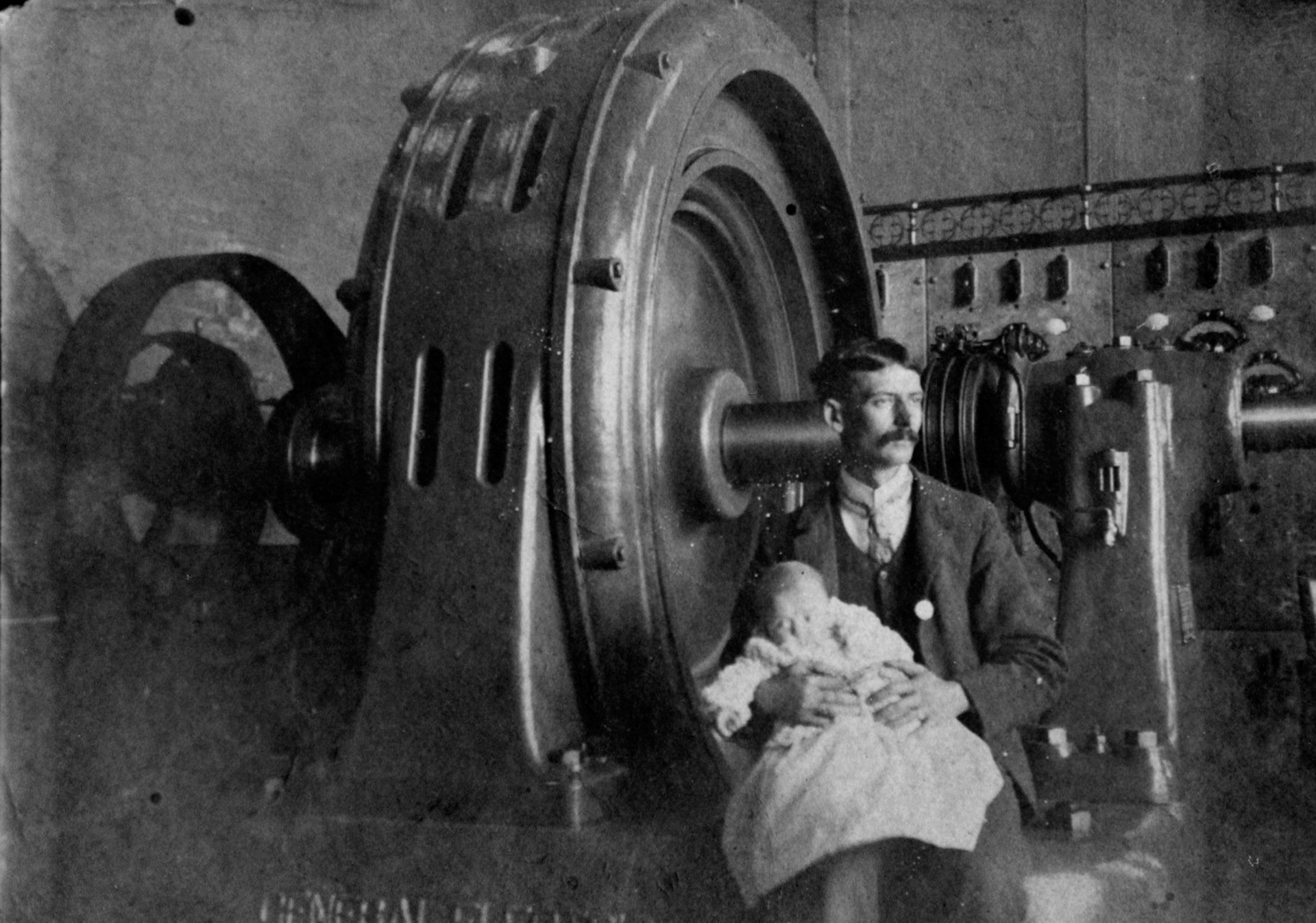
The contract for the construction of the power plant and the canal's electrification was awarded to the Canadian General Electric Company in January 1899—just ten months before the canal’s official opening. As a result, it wasn’t until the spring of 1901 that arc lamps (streetlights) illuminated the canal, and the spring of 1902 that the locks and sluice gates were powered by electric motors.
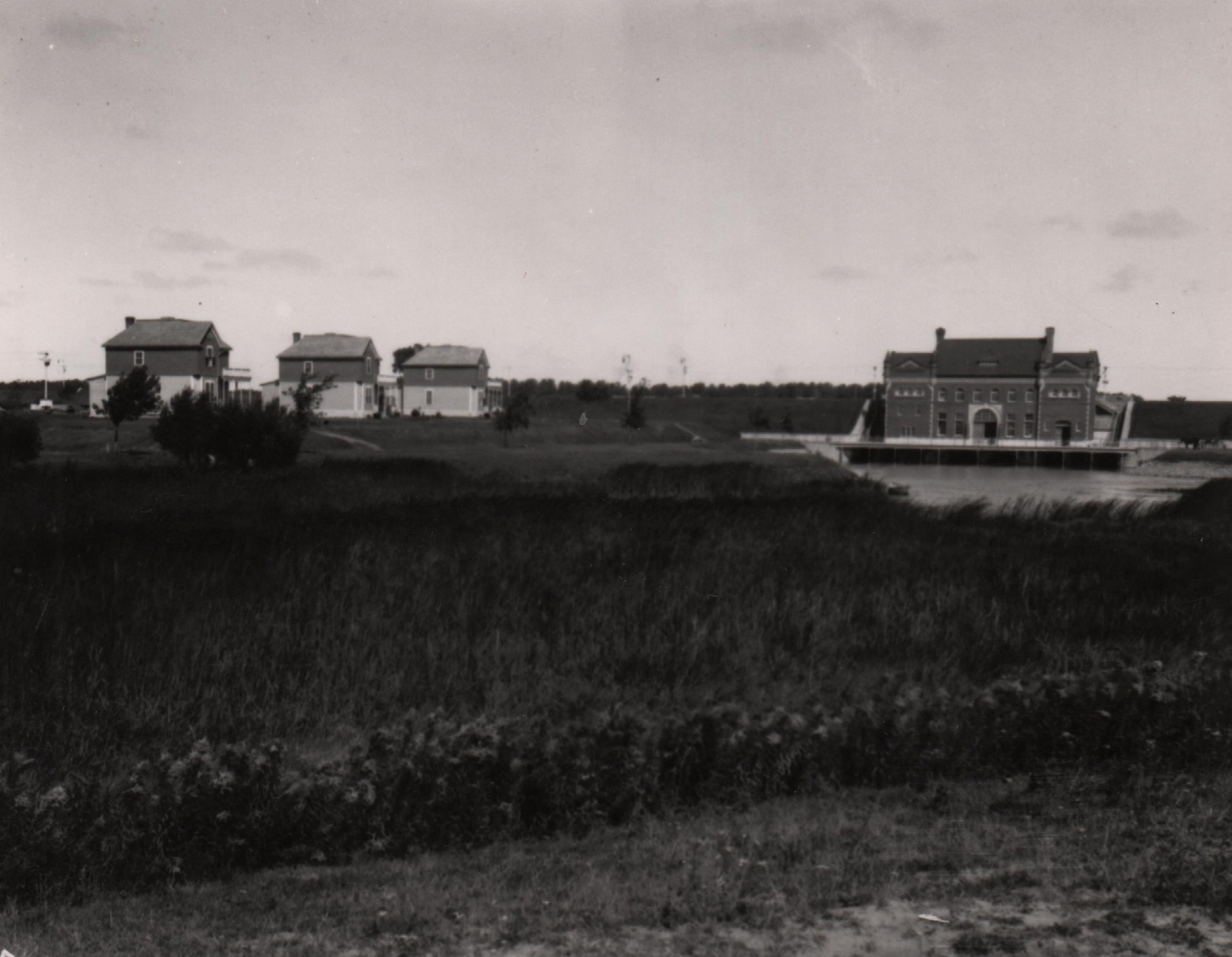
At the time, the site included five additional buildings: four houses for staff and a stable/workshop. Today, only the power plant and the workshop remain.
-3vlxohk.png?alt=media&token=f28b675a-05de-4091-9df4-9d208d5dd244)