The Great Canal Race
The construction of the Soulanges Canal occurred within a specific political and economic context.
In the early 19th century, despite the presence of several canals, navigation between Montreal and the Great Lakes was still facing significant challenges. The various canals and structures along the route were not standardized and often had physical features incompatible with the rapidly increasing size of ships.
This resulted in significant traffic slowdowns and bottlenecks, which led to a large portion of maritime traffic to be diverted to the Port of New York, connected to the Great Lakes by the Erie Canal since 1825.
In 1870, the Canadian government established a Royal Commission of Inquiry to address these issues, which were causing considerable economic losses. Modernizing the canal network became critical for the nation’s economic prosperity, as well as for promoting interprovincial and international trade.
The Lachine (1825), Cornwall (1843), and Welland (1834) canals were expanded and upgraded, while the outdated Beauharnois Canal (1845) was deemed insufficient and slated for replacement by a more efficient and modern canal.
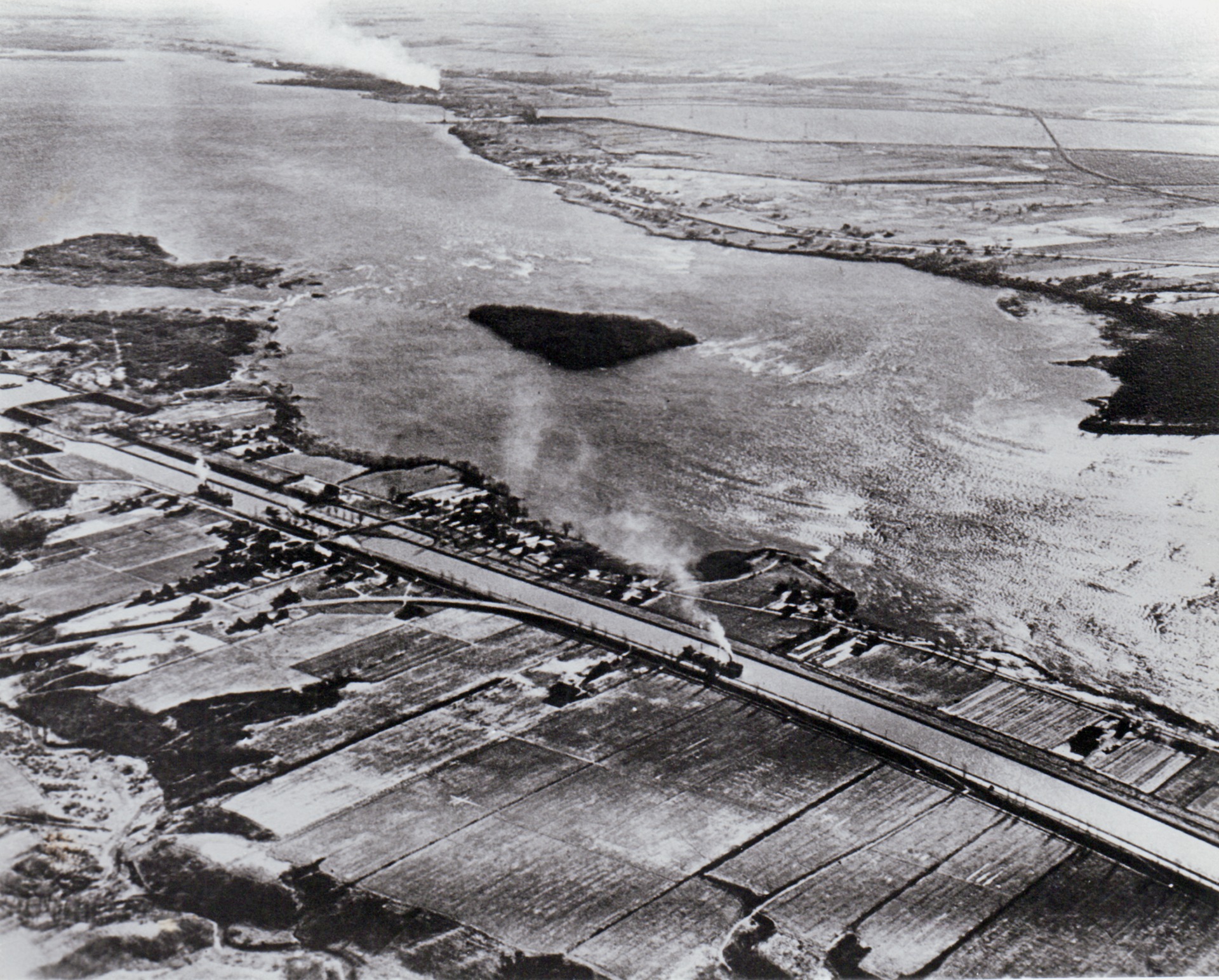
This new canal would be built on the north shore of the river, crossing the vast Soulanges territory.
-3vlxohk.png?alt=media&token=f28b675a-05de-4091-9df4-9d208d5dd244)