

The Men Behind the Canal
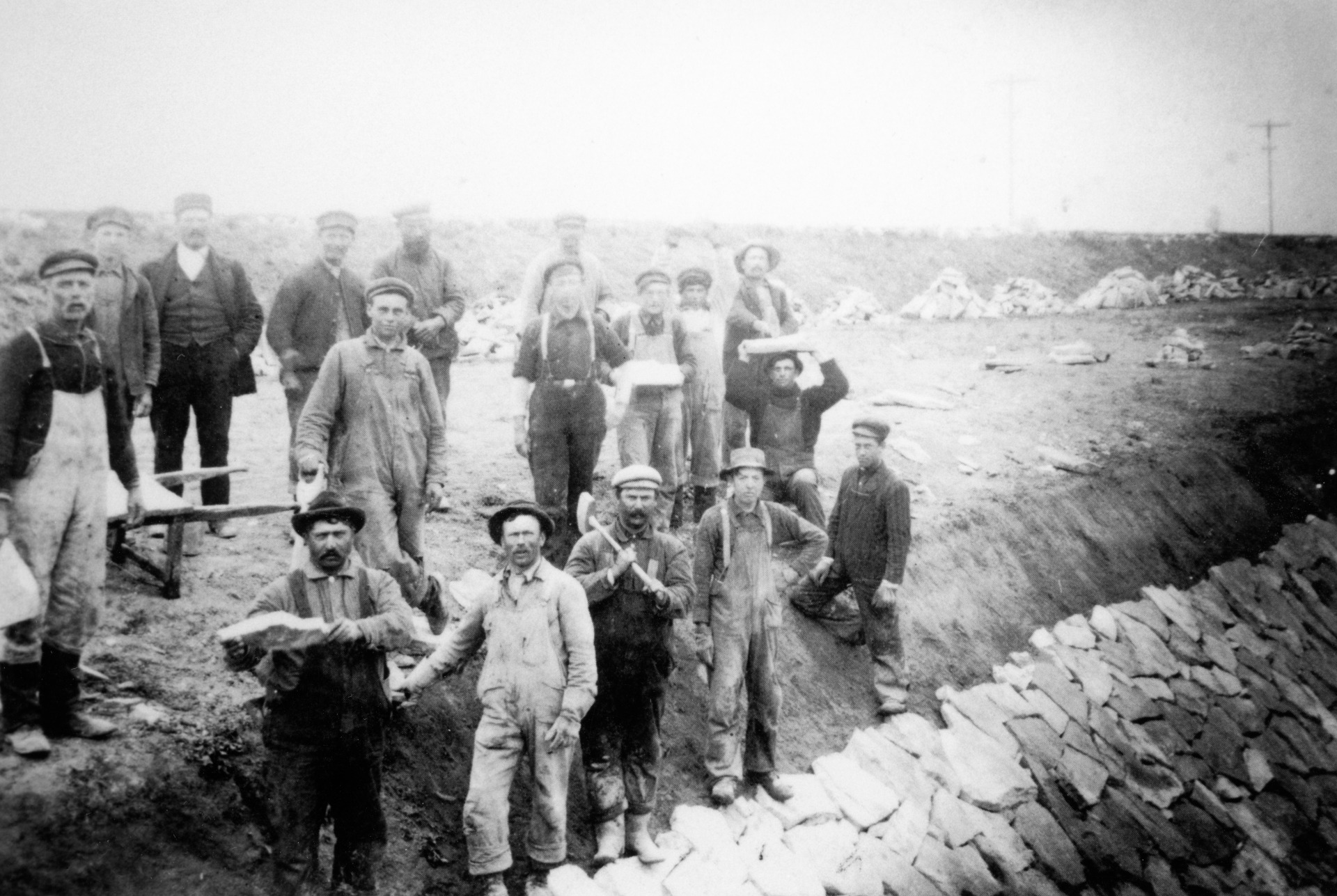
At the peak of construction, nearly 1,200 workers were spread across the 13 sections along the canal's route.
In addition to local laborers, most of the workers were immigrants who had recently arrived in the country in search of a better future. Whether Italian, Belgian, Irish, or Finnish, these men, part of the late 19th-century migration waves, formed the workforce behind the construction of the Soulanges Canal.
Each year, from May to September, workers toiled for 10 hours a day, earning a daily wage ranging from $1.50 for laborers to $3.25 for stonecutters and masons.
Despite the use of cutting-edge machinery for the time—dynamite, steam-powered shovels, crushers, and derricks, the majority of the work was done by hand with pickaxes and shovels. Many horses also contributed to the work and perished in the process. These animals hauled carts filled with soil, stones, and tools and pulled scrapers used to remove the upper layers of soil.
Over the course of the construction, 22 workers lost their lives due to harsh working conditions and accidents. Finally, on October 9, 1899, the Soulanges Canal was completed and opened to navigation, at a much higher human and financial cost than originally anticipated.
-3vlxohk.png?alt=media&token=f28b675a-05de-4091-9df4-9d208d5dd244)