
A Perfect Blend of Nature and Culture

Audio guide:
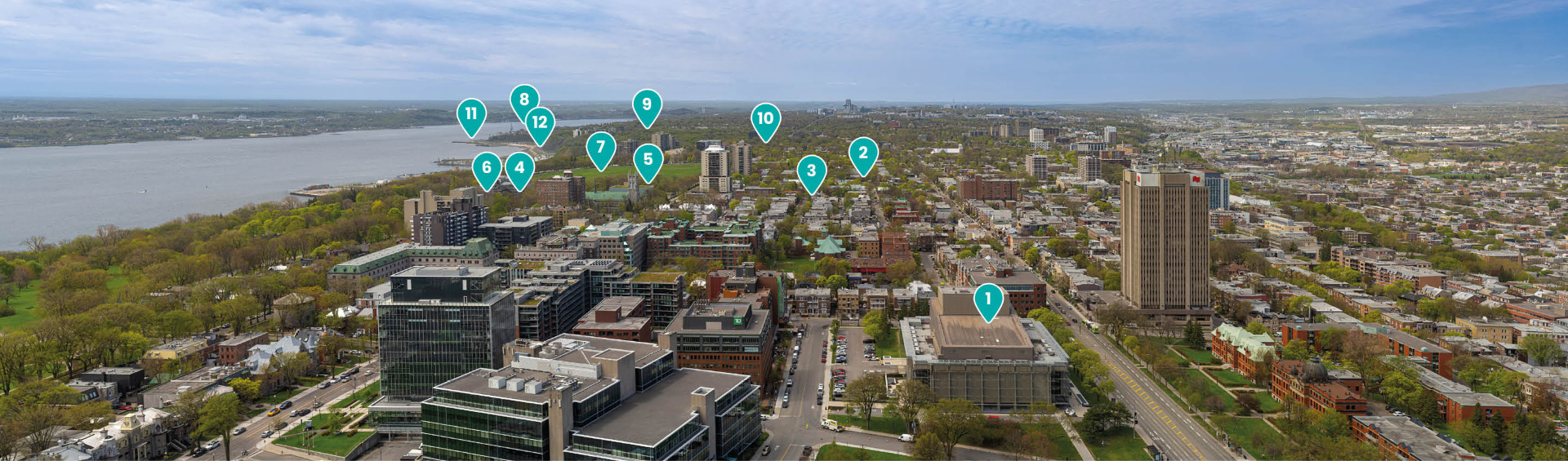
Find here the images that accompany the audio guide:
To the west of the Observatory, you get a bird’s-eye view of several of Québec City’s bustling neighbourhoods. Ready to see what this side of the city has to offer? Let’s go!
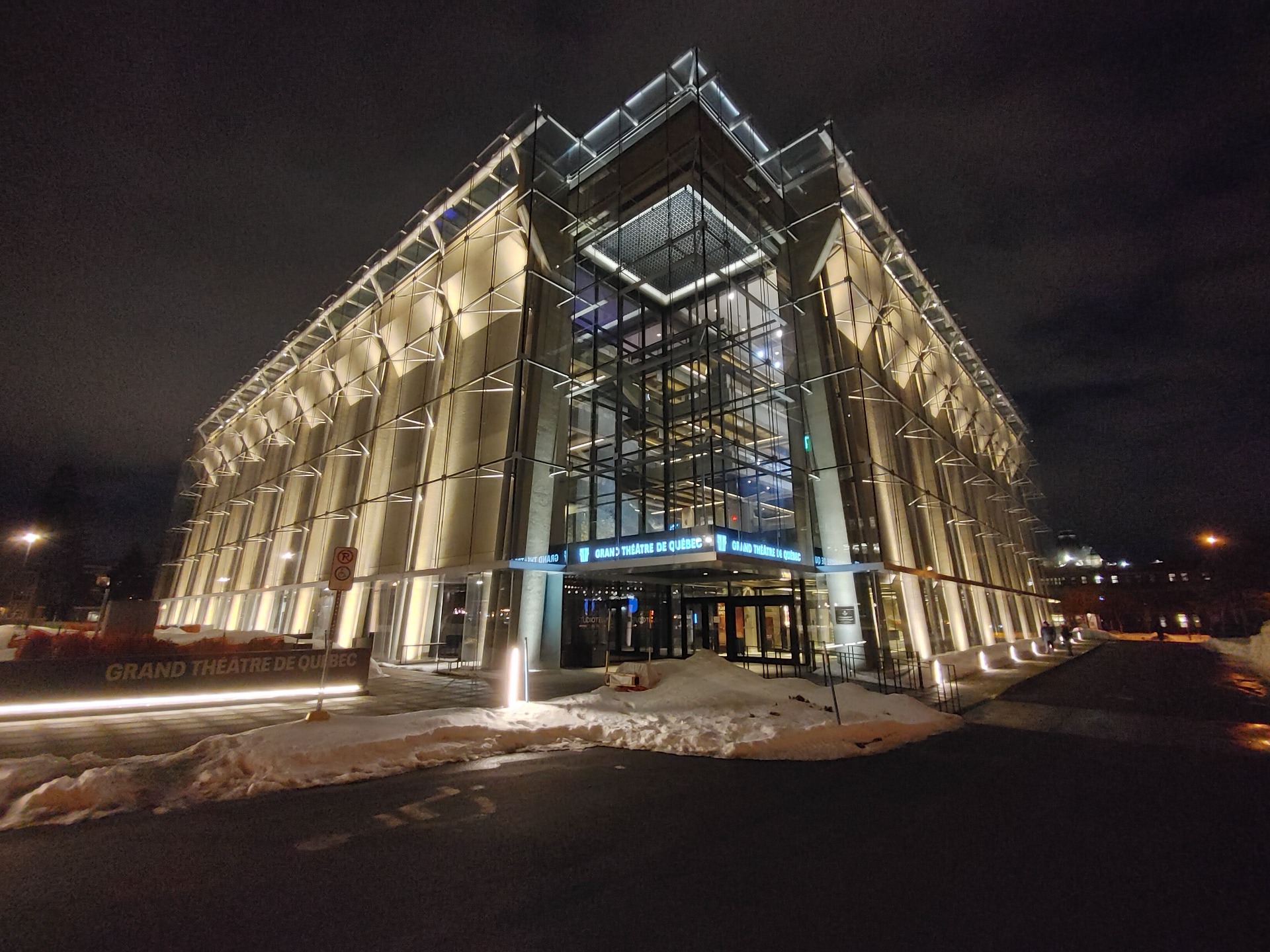
We’ll start with the Grand Théâtre de Québec (1), located just below the Observatory.
This provincial artistic and cultural complex was inaugurated in 1971. It was built in this specific location to create an attraction in the Parliament Hill area during after-work hours.
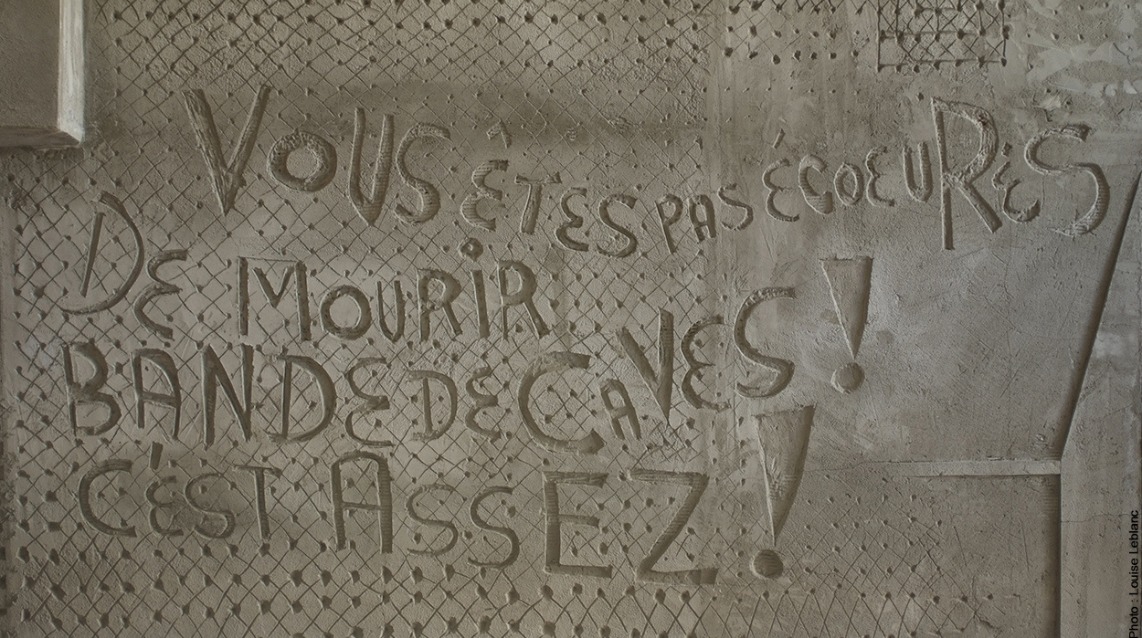
The Grand Théâtre is famous for its gigantic interior mural by artist Jordi Bonet. The mural covers the inside of three of the building’s four exterior walls. If you’re in the area, it’s definitely worth the stop!
Shall we continue and explore some more sites? If you look a little further out, you’ll see the Montcalm district (2), just a few minutes’ walk from the Observatory.
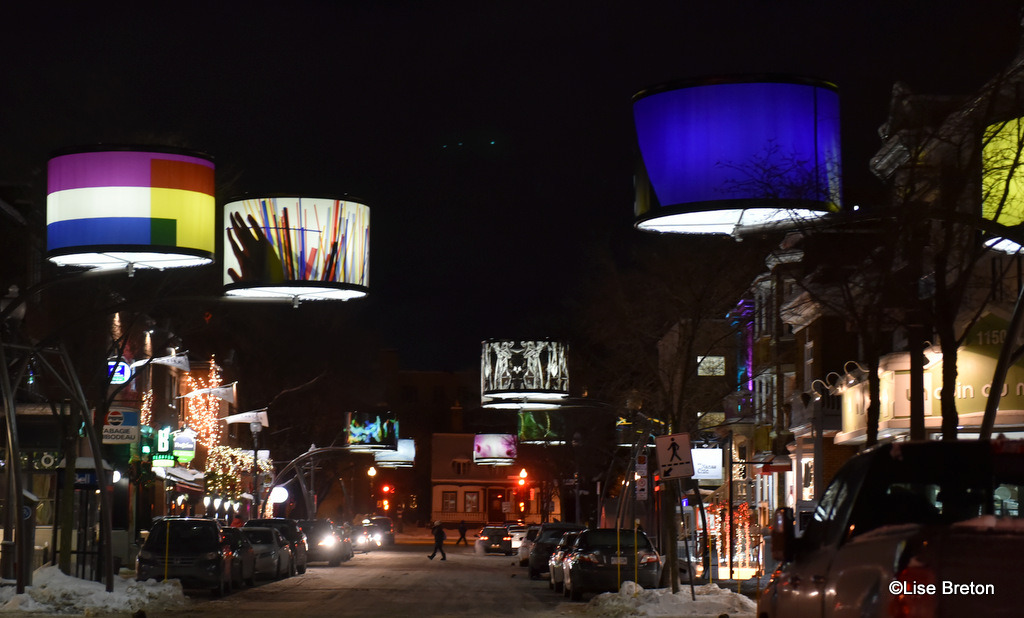
The Montcalm district is the perfect blend of culture and relaxation. You can really feel its friendly atmosphere on Cartier Avenue (3). The avenue hosts a variety of shops, restaurants and lively outdoor dining patios. It features 34 giant lampshades showcasing the work of Quebec artists.
Just off Cartier Avenue to the south is the Musée National des Beaux-Arts du Québec (4). You can see part of the museum’s Pierre Lassonde Pavilion from the Observatory (5).
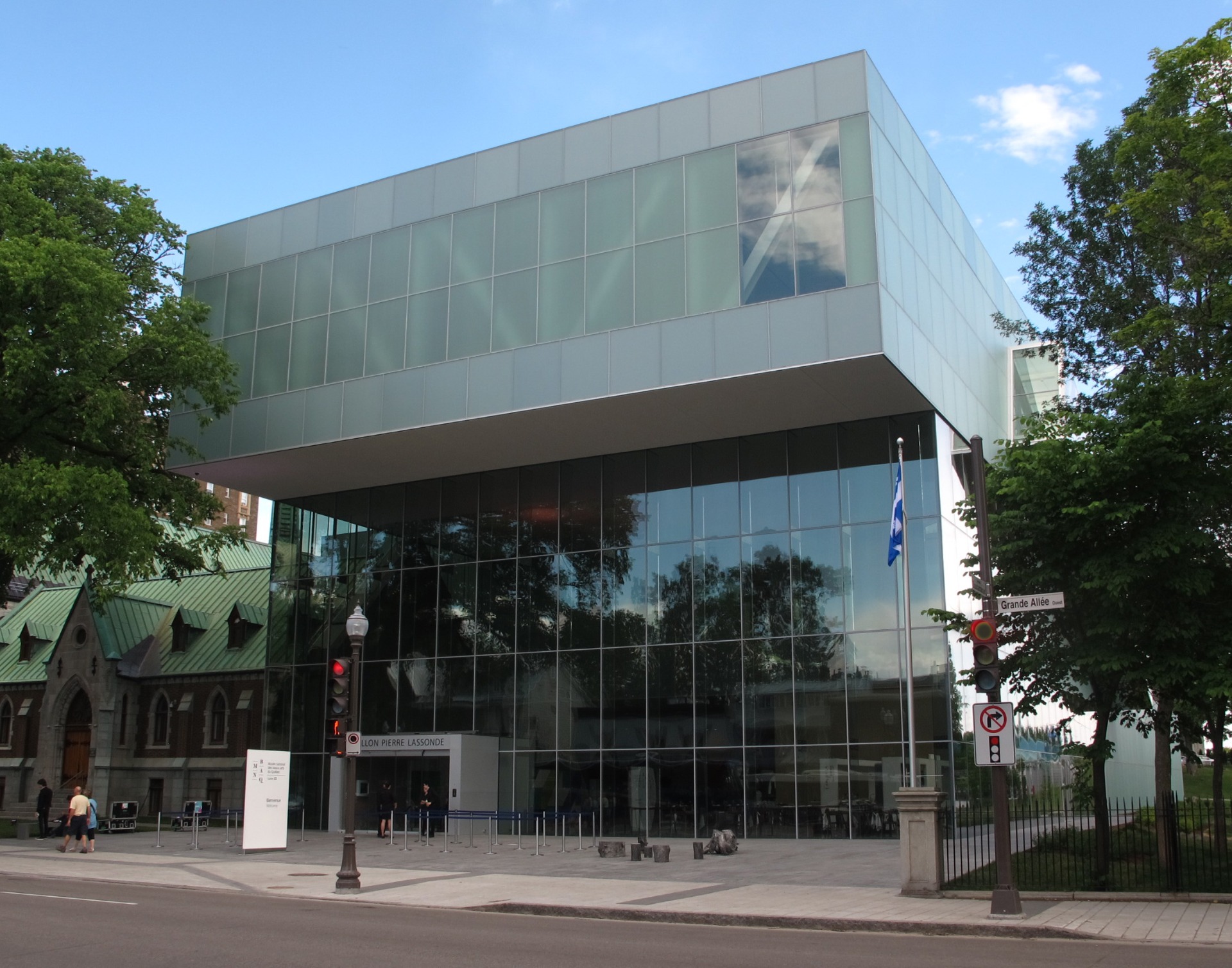
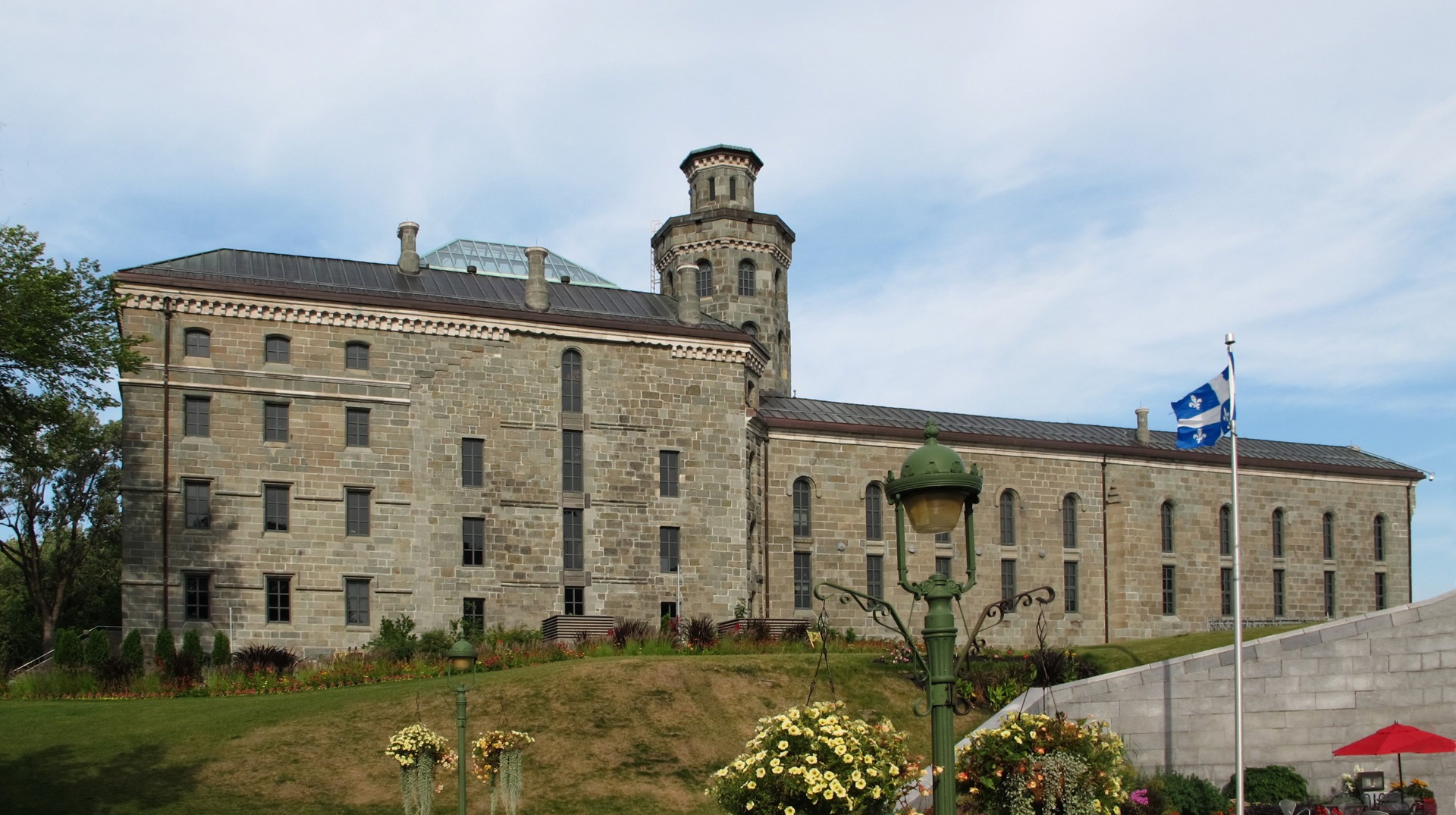
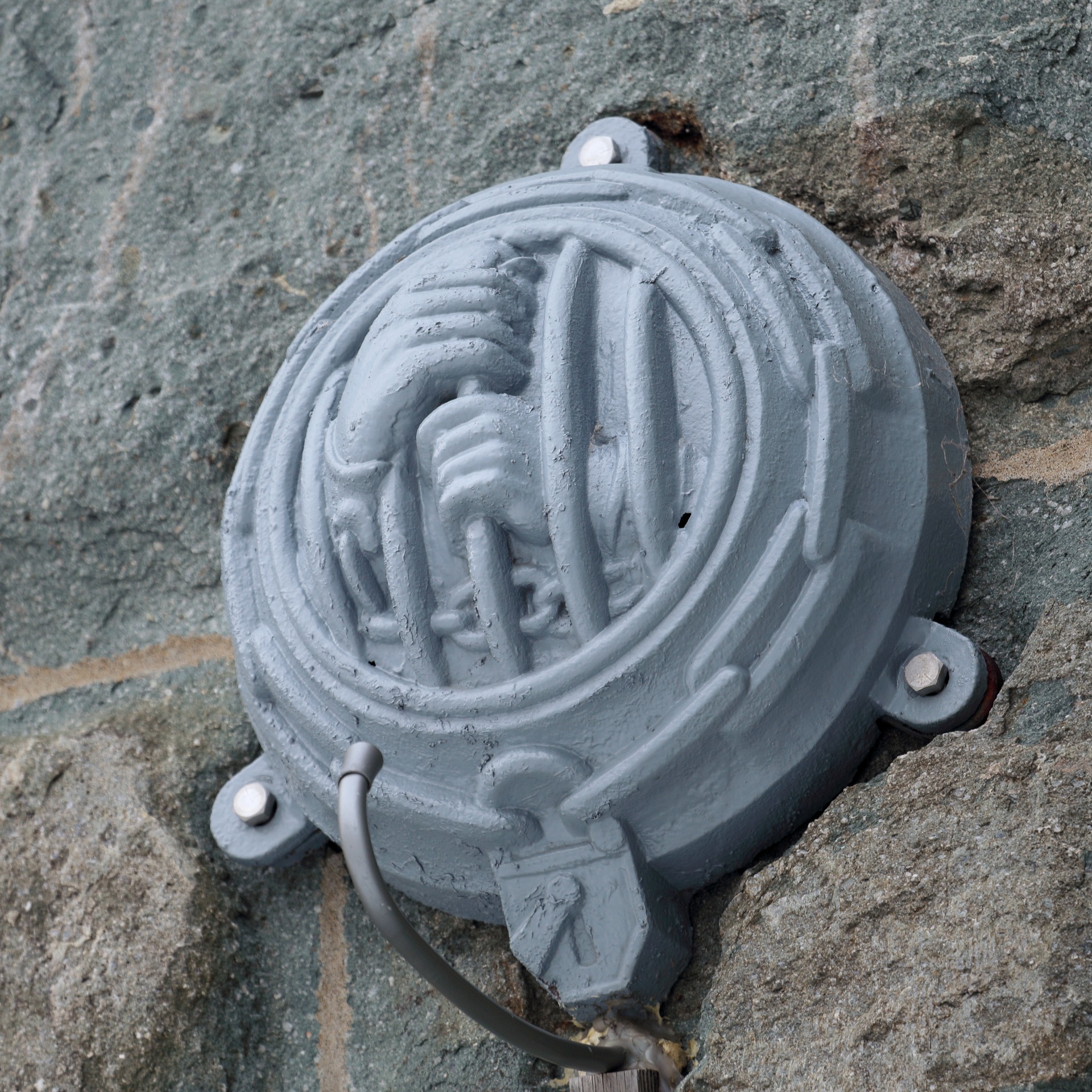
The museum presents world-class exhibitions. One of its many buildings you can also see from here is the Charles-Baillairgé Pavilion (6). This is where the city’s prison used to be, from 1867 to 1970. Several cells were preserved when the prison was remodelled as a museum in the late 1980s.
From the Observatory, you can also see the Plains of Abraham sports field (7). Since the large expanse is covered with grass in the summer and snow in the winter, it’s easy to spot among the buildings.
A little further on, the Saint-Michel-de-Sillery Church (8) faces the river and is a visual landmark in the posh Sillery borough (9). Maguire Avenue, easily visited by bike, is the commercial hub of the area. Here you can explore stylish shops and restaurants with an international flavour.
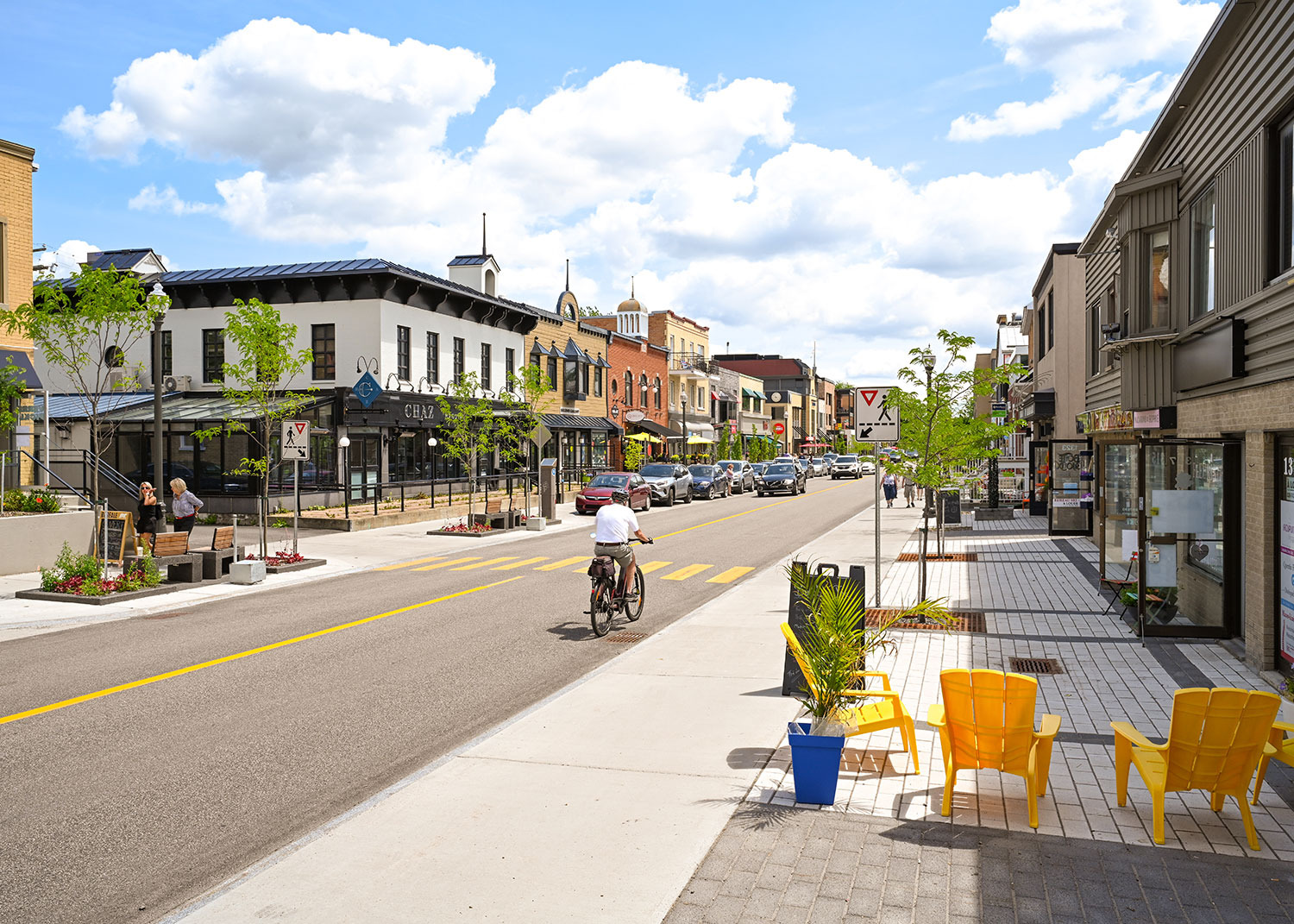
And if you don’t want to stick out too much, pay attention to how you pronounce Maguire! Residents of Québec City give it a French twist—“Ma-goo-are”—while visitors tend to pronounce “Mag-wire” as it is said in English. Consider yourself forewarned!
If you enjoy nature walks, Sillery also has a number of peaceful green spaces, including the Bois-de-Coulonge Park (10). This magnificent 24-hectare estate was home to Quebec’s lieutenant-governors between 1870 and 1966. You can see the park’s greenery from the Observatory on a clear day.
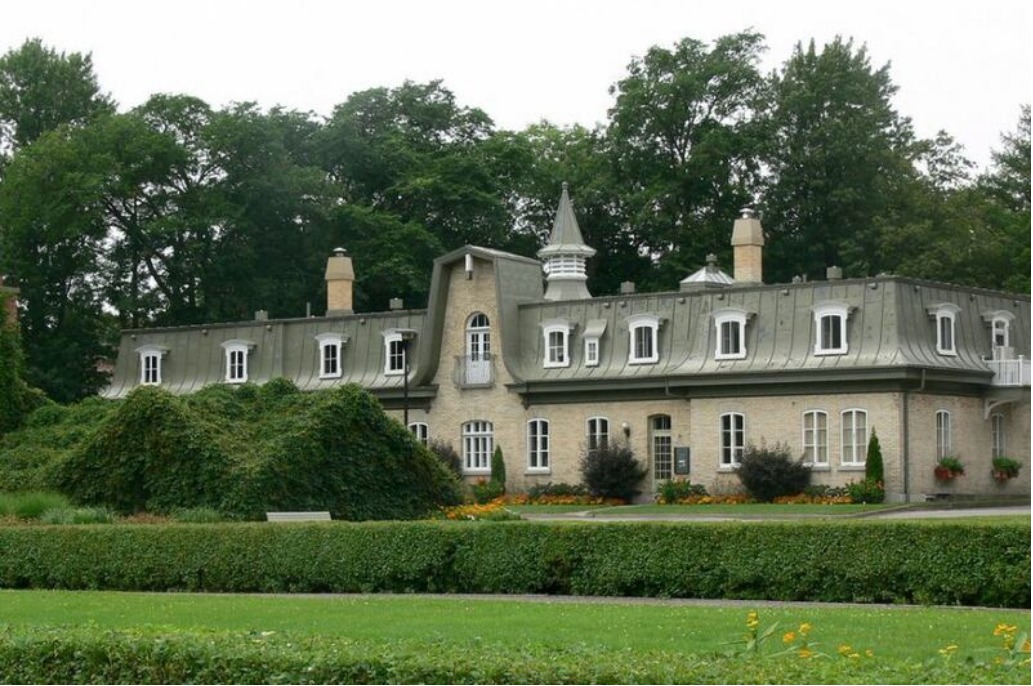
The park features trails through wooded areas as well as outstanding landscaping. And that’s not all! There are also wide-open spaces and children’s play areas. It’s the perfect place to relax with the family.
When you are in the Bois-de-Coulonge Park, you can also access the 294-step staircase to the Promenade Samuel-De Champlain (11).
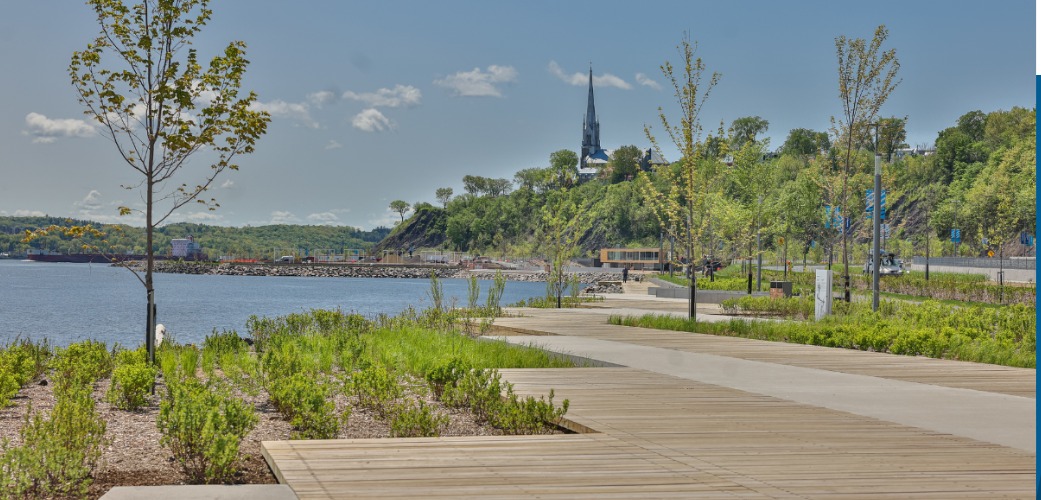
The promenade stretches over 4.2 miles along the river and features works of art, an observation tower, theme gardens and interpretive panels. It’s ideal for strolling, cycling or in-line skating with family and friends!
The path features six areas or stations. And don’t forget your swimsuit! The Station de la Plage (12), which can be seen from here on a clear day, has water jets and an infinity pool that makes you feel like you’re actually swimming in the river!
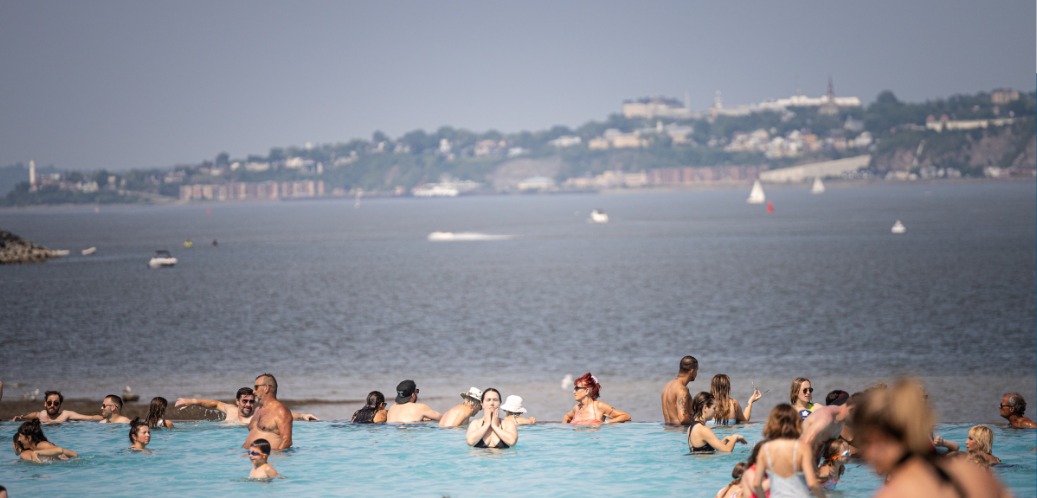
Québec City is full of surprises.
To learn about other must-see sights and activities on the western side of the city, feel free to check out the additional information available at the bottom of the page!
Want to learn more about the western side of Québec City? Click on the topics that interest you!
Spotlight on history
Different ways to explore Québec City
Find the locations mentioned in the audio guide on our personalized Google map and continue the adventure after your visit to the Observatoire de la Capitale!
Contenu GoogleMaps externe bloqué
Pour voir le contenu de GoogleMaps, vous devez consentir au stockage de cookies tiers et au traitement des données par GoogleMaps. Consultez notre Politique de confidentialité pour plus d'informations.