
The Ndakina
Land Acknowledgement
In a spirit of friendship and solidarity, Van Grimde Corps Secrets pays tribute to the First Peoples of these lands. We would like to acknowledge that the land on which we gather is the traditional and unceded territory of the Abenaki people and the Wabanaki confederacy, the Ndakina, which includes parts of southeastern Quebec, western Maine, and northern New England.
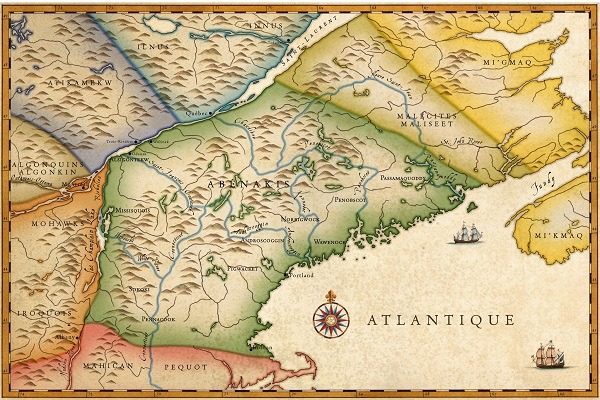
The name Wabanaki refers to “people of the east” and comes from Wabun or Waban meaning “east” or “rising sun” and Aki meaning “earth”. The Abenakis once occupied a vast territory comprising the present-day states of Maine and Vermont as well as southern Québec (Eastern Townships, Centre-du-Québec region and Chaudières-Appalaches). The Abenakis soon came into contact with Europeans and played an active role in the fur trade. However, the arrival of French and British colonists on their land changed their way of life dramatically, affecting mostly their settlement patterns, land use and movement within their territory.
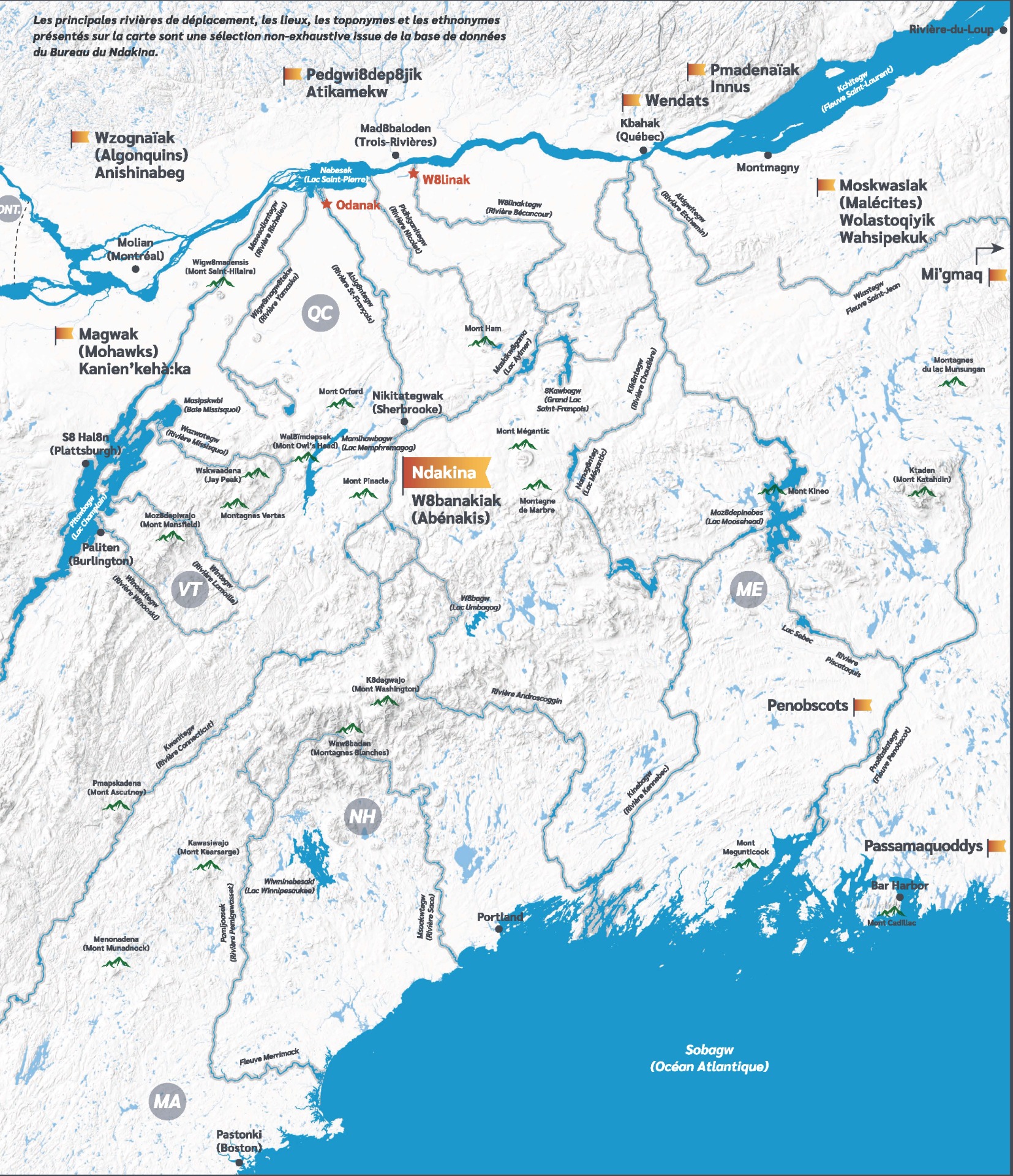
During much of the 17th century, the Abenaki were hunters, fishers and gatherers. Favoured game was more often moose than deer. They travelled mainly by birchbark canoes on lakes and streams, and lived in villages near waterfalls on major rivers during the seasons when migratory fish could be harvested. During other seasons, they dispersed in family groups to the coast or to small camps on interior tributaries. These camps became the bases of trapping territories during the heyday of the fur trade. When the trade declined, many turned to the lumber industry and basketry.
Together with the Wolastoqiyik (Maliseet), Passamaquoddy, Mi’kmaq and Penobscot, the Abenaki formed the Wabanaki Confederacy in the 1680s. This was a political and cultural union that played a significant role in wars against the Haudenosaunee and in the American Revolution. In 1993, the confederacy was revived, and now includes the Métis Nation. Since then, the confederacy has asserted Indigenous rights in issues regarding ecology, health, and access to land and natural resources.
Today, there are over 10 000 Abenakis living for the most part in Canada and the United States. Many have gained recognition for their outstanding role in the defence of Aboriginal rights as well as in culture, the arts, and literature, including Alanis Obomsawin (documentary filmmaker, National Film Board of Canada), Jean-Paul Nolet (news anchor, Radio-Canada), Christine Sioui-Wawanoloath (artist and author), Evelyn O’Bomsawin (pioneer in the defence of Aboriginal women’s rights in Québec) and Sylvia Watso (co-founder of the Québec Native Women’s Association), to name just a few.
(Sources: Musée des Abénakis, Canadian Encyclopedia)