

Joyce Henderson
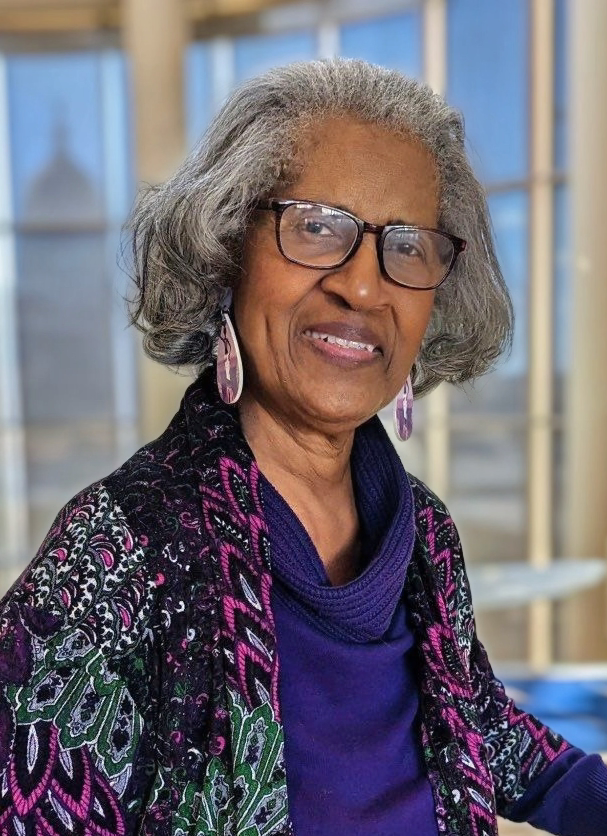
“Walk like you know where you're going. Talk like you know what you're talking about.”
— Joyce Henderson
About
Joyce Henderson is a lifelong educator and civil rights activist from the Green Pastures community in Spencer, whose life bridges local activism and national history.
A graduate of Dunjee High School, Henderson was mentored by Clara Luper, who encouraged her to join the NAACP Youth Council. As a teenager, she participated in the 1958 Oklahoma City sit-ins and later traveled to Washington, D.C. at age sixteen to attend the March on Washington for Jobs and Freedom, where she witnessed Martin Luther King Jr. deliver his “I Have a Dream” speech.
After graduating from Langston University, Henderson returned to her community as an educator, ultimately dedicating nearly forty years to Oklahoma City Public Schools as a teacher, principal, and district leader.
Her Story
Joyce Henderson grew up in Green Pastures, a historically Black community in Spencer that she describes not as separate from Oklahoma City, but deeply connected to it.
Her early life was shaped by a network of institutions — church, school, and community — where expectations were clear: discipline, excellence, and responsibility to others.
At Dunjee High School, she encountered one of the most influential figures of her life: Clara Luper. More than a teacher, Luper was an organizer, strategist, and mentor who trained students not just academically, but behaviorally — preparing them for direct action. Through the NAACP Youth Council, Henderson became part of the: Oklahoma City sit-ins
As a teenager, she and her peers were taught how to endure harassment without retaliation. They were spat on, insulted, and physically provoked — yet instructed to remain composed.
“We were not afraid,” she recalls. “First of all, we were not alone.”
That sense of collective discipline defined her early understanding of activism.
At sixteen, Henderson traveled with Luper and fellow students to Washington, D.C. to attend the: March on Washington for Jobs and Freedom.
Standing among more than 200,000 people, she witnessed Martin Luther King Jr.’s historic speech. What struck her most was not only the moment, but the realization that the struggle for equality extended far beyond Oklahoma City.
“It opened our eyes,” she explains. “You realized everybody had the same concerns.”
Music also played a role in her activism. As a song leader for the Youth Council, she helped lead freedom songs during demonstrations — reinforcing unity, rhythm, and shared purpose.
After college, Henderson returned to Dunjee as a social studies teacher, continuing the same tradition of expectation and mentorship that had shaped her.
In 1972, the implementation of the Oklahoma City school desegregation plan — commonly known as the Finger Plan — led to the closure of Dunjee High School. Henderson witnessed the emotional toll on students who were reassigned to schools where they felt unwelcome.
“They don’t want us,” students would say — a sentiment she recalls as more painful
than segregation itself.
She transitioned into school administration, serving as a principal for two decades and later joining the district’s central administration. Across nearly forty years, she worked to guide students through systems that were often changing faster than they could understand.
Her career reflects a throughline: education as both protection and possibility.
Events
1958 Oklahoma City Sit-Ins
Participated as a member of the NAACP Youth Council under Clara Luper.
March on Washington for Jobs and Freedom
Attended at age sixteen and witnessed the “I Have a Dream” speech.
1972 Oklahoma City School Desegregation (Finger Plan)
Experienced the closure of Dunjee High School and student reassignment.
Passage of the Civil Rights Act of 1964
Contextual backdrop to her activism and educational career.
Locations
Green Pastures Community (Spencer, Oklahoma)
Foundational home community rooted in education, faith, and civic life.
Dunjee High School
Site of education, activism, and later her teaching career.
Langston University
Higher education institution shaping her path into teaching.
Star Spencer High School & Northeast High School
Sites of student reassignment during desegregation.
Calvary Baptist Church
Faith-based institution connected to civic and community life.
Contributions
- Participated in early civil rights direct-action campaigns as a youth activist.
- Served as a bridge between generations of students as both teacher and administrator.
- Helped guide students through the transition of school desegregation in Oklahoma City.
- Preserves and shares firsthand civil rights history through public speaking and education.
- Contributed to the long-term development of Oklahoma City Public Schools leadership.
In Her Own Words
- “We were taught not to respond... no matter what was said or done to us.”
- “Walk like you know where you're going. Talk like you know what you're talking about.”
- “That march opened our eyes... you realized everybody had the same concerns.”
- “When they went to those schools, they said, ‘They don’t want us.’”
- “You cannot put a price on the impact you've had on students — and they've had on you.”
Legacy
Joyce Henderson’s life reflects the continuity between youth activism and institutional leadership.
She represents a generation trained in discipline, strategy, and collective action — young people who were prepared not only to protest injustice, but to navigate and transform the systems that followed.
Her story highlights:
- Collective courage over individual fear
- Training and discipline within the Civil Rights Movement
- The emotional cost of school desegregation
- Education as a long-term tool for equity
Through her voice, civil rights history becomes not just a series of events, but a lived practice — carried from the lunch counter to the classroom, and from the classroom into the lives of generations of students.