

The collapse of Cape Diamant
The Cap-Blanc District is not well known to most. Yet, this former 19th-century working-class neighbourhood nestled between the cliffs of Cape Diamant and the St. Lawrence River was the scene of one of Québec City’s most tragic events.
On September 19, 1889, at 7:30 p.m., a boulder came loose from Cape Diamant, triggering a huge landslide that buried 13 homes under tons of rock.
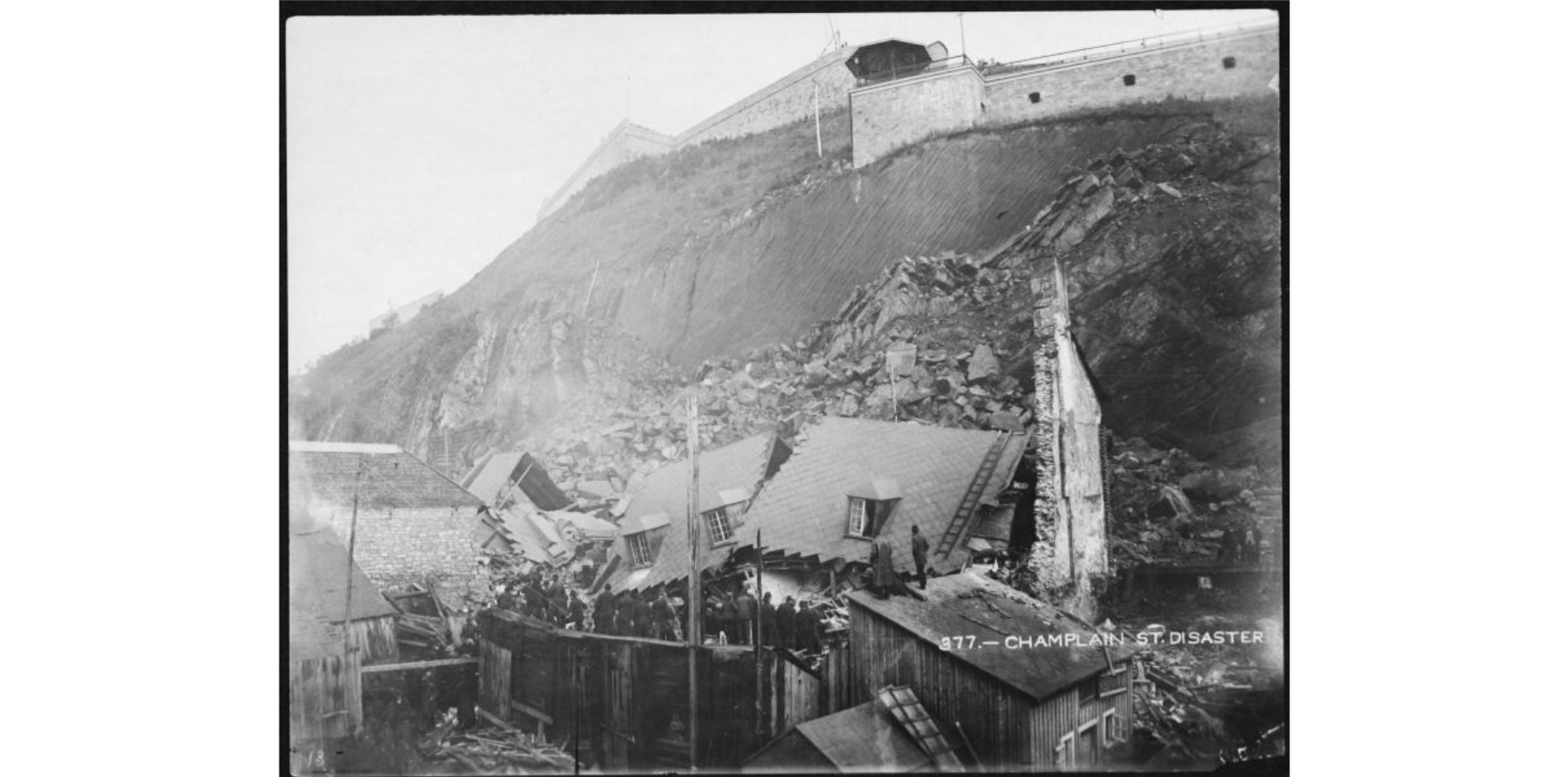
A rescue operation involving police, firefighters, soldiers and volunteers was quickly organized to try and save the survivors.
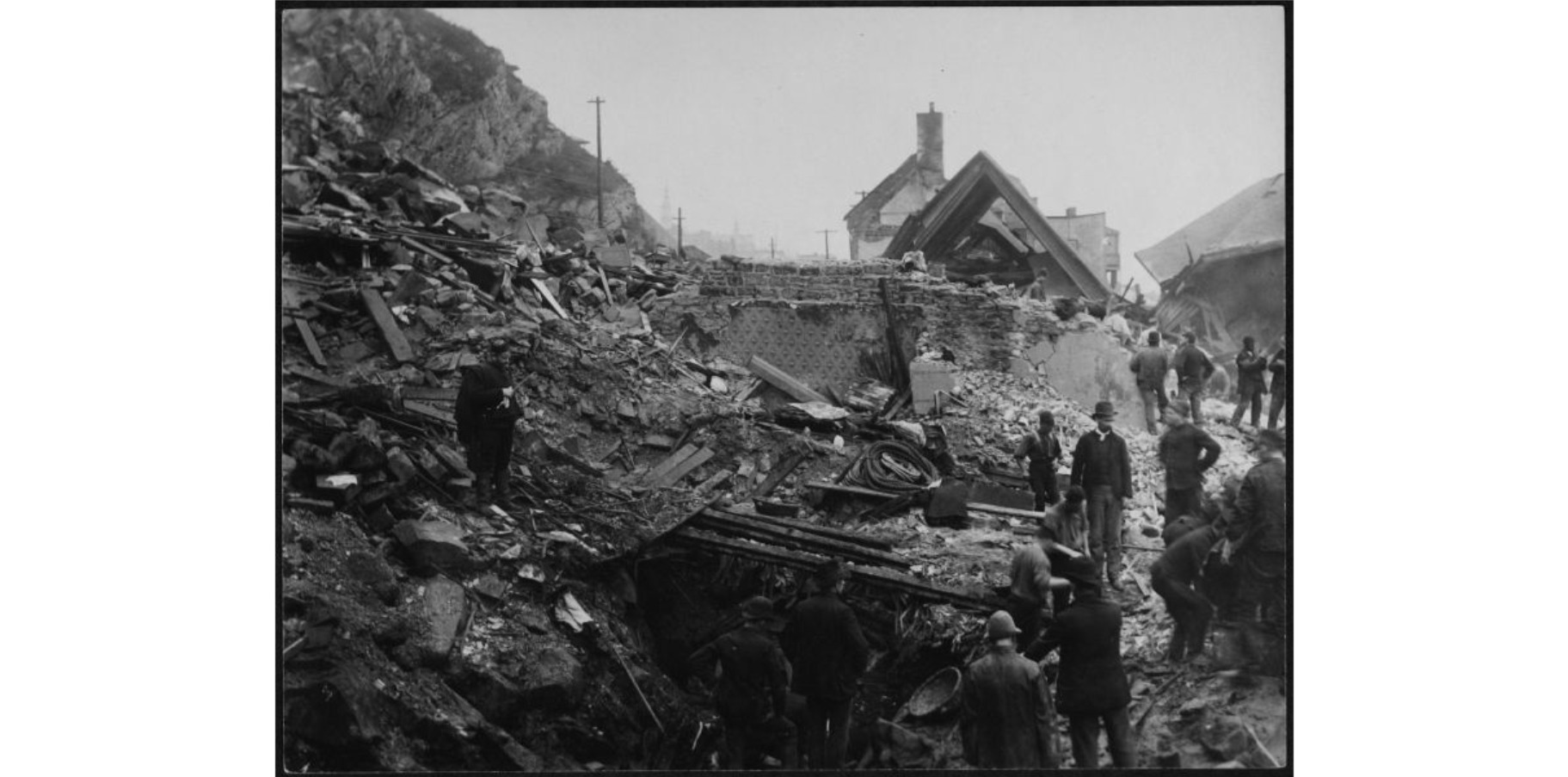
The landslide came after several days of torrential rain had weakened the Cape Diamant cliff. With no vegetation on the cliff-face to solidify it, the buildings at the bottom were vulnerable. Journalists described a somber scene—bodies found under the rubble, survivors wailing and witnesses crying. Joseph Kemp, aged 74, was pulled out alive after spending 113 hours under the rubble. Unfortunately, he succumbed to his injuries shortly after his rescue.
This landslide wasn’t the first to hit the mainly Irish neighbourhood of Cap-Blanc. A similar event, albeit less serious, had already occurred in 1841. Authorities were aware of the high risk of the cliffside falling, but the measures they put in place were not enough to prevent this tragedy.
In the wake of the disaster, which left 43 dead and around 75 injured, steps were finally taken to reinforce the stability of the cliff and the Dufferin Terrace above. Stones and debris from destroyed buildings were even incorporated into the face of the cliff as reinforcement. Today, fences and a low wall along Champlain Boulevard protect dwellings from further landslides.
Spotlight on history