

Travelling Through History

Audio guide:
Find here the images that accompany the audio guide:
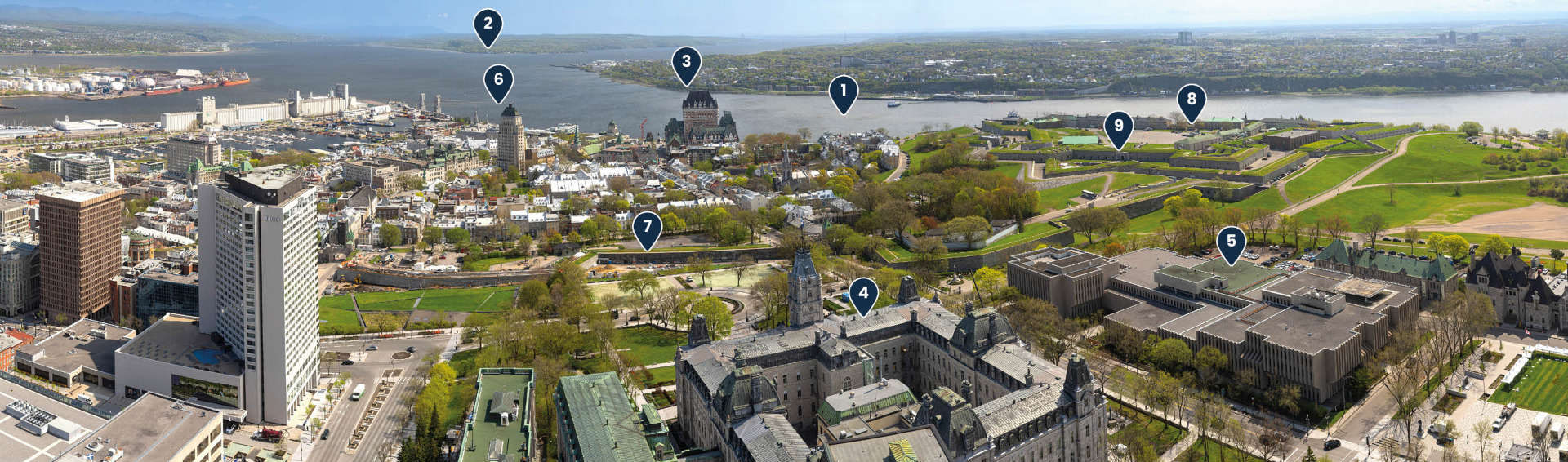
To the East, Québec City spreads out in all its glory. The St. Lawrence River (1) and Île d’Orléans (2) provide a breathtaking backdrop for the Old City in front of you. But the first thing that caught your eye was probably the Château Frontenac (3)!
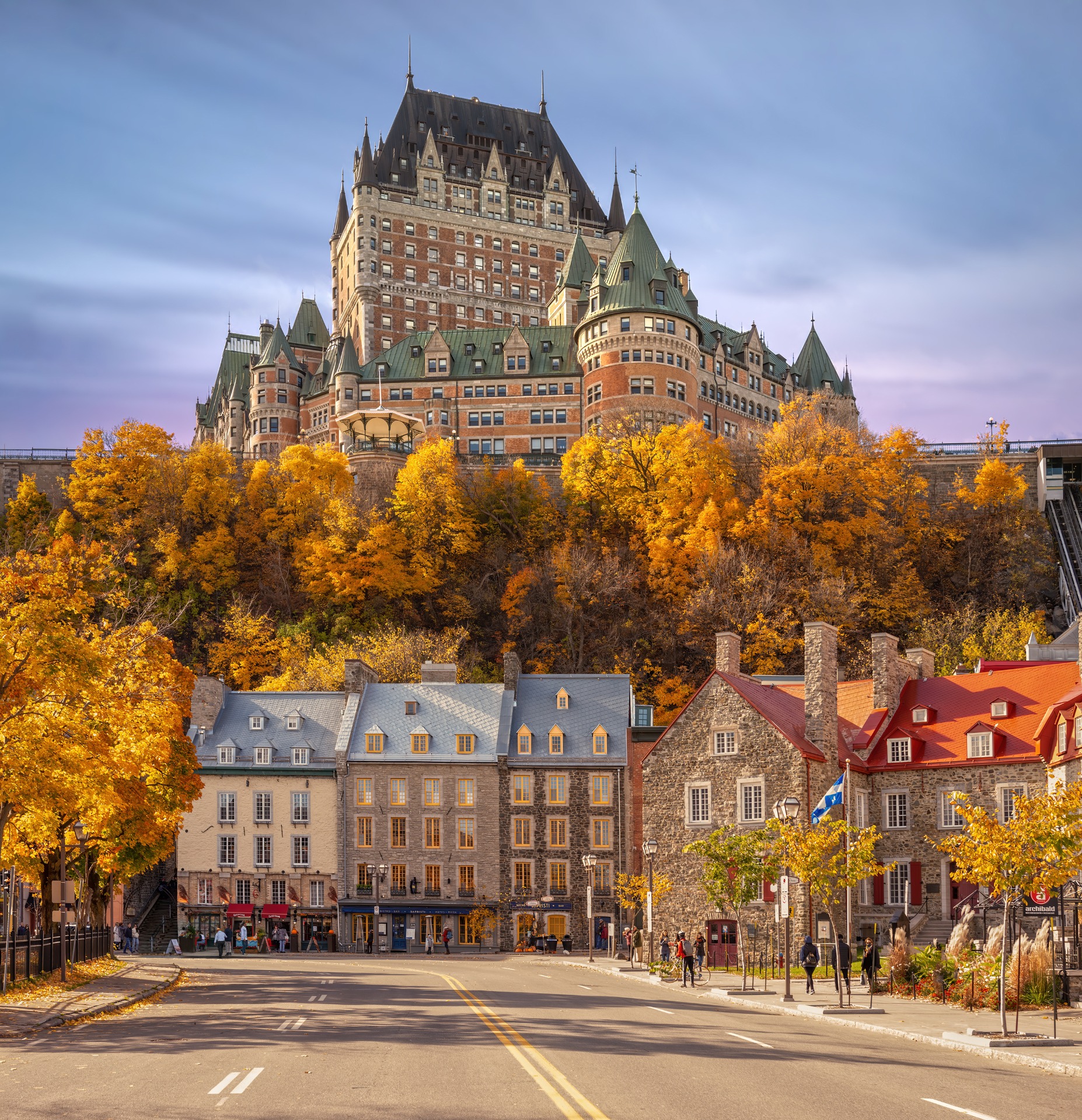
Perched on top of Cape Diamant, the hotel is the quintessential symbol of Québec City and one of the most photographed hotels in the world. Its castle-style architecture suggests elegance and sophistication. It has welcomed many famous names since it opened in 1893.
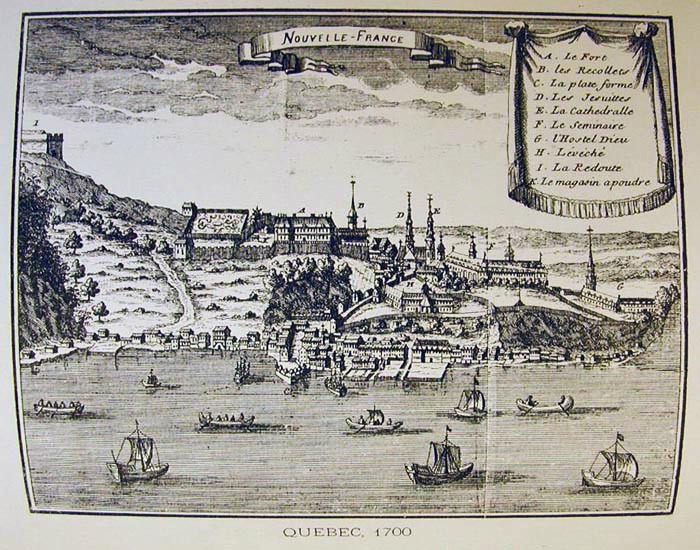
Surrounding the Château, the cobblestone streets and historic buildings of Old Québec City take visitors back through the centuries. Founded in 1608 by Samuel de Champlain, Québec City has a rich history.
Once founded, the city grew rapidly. It is organized like a medieval European city and is divided into Upper and Lower Town.
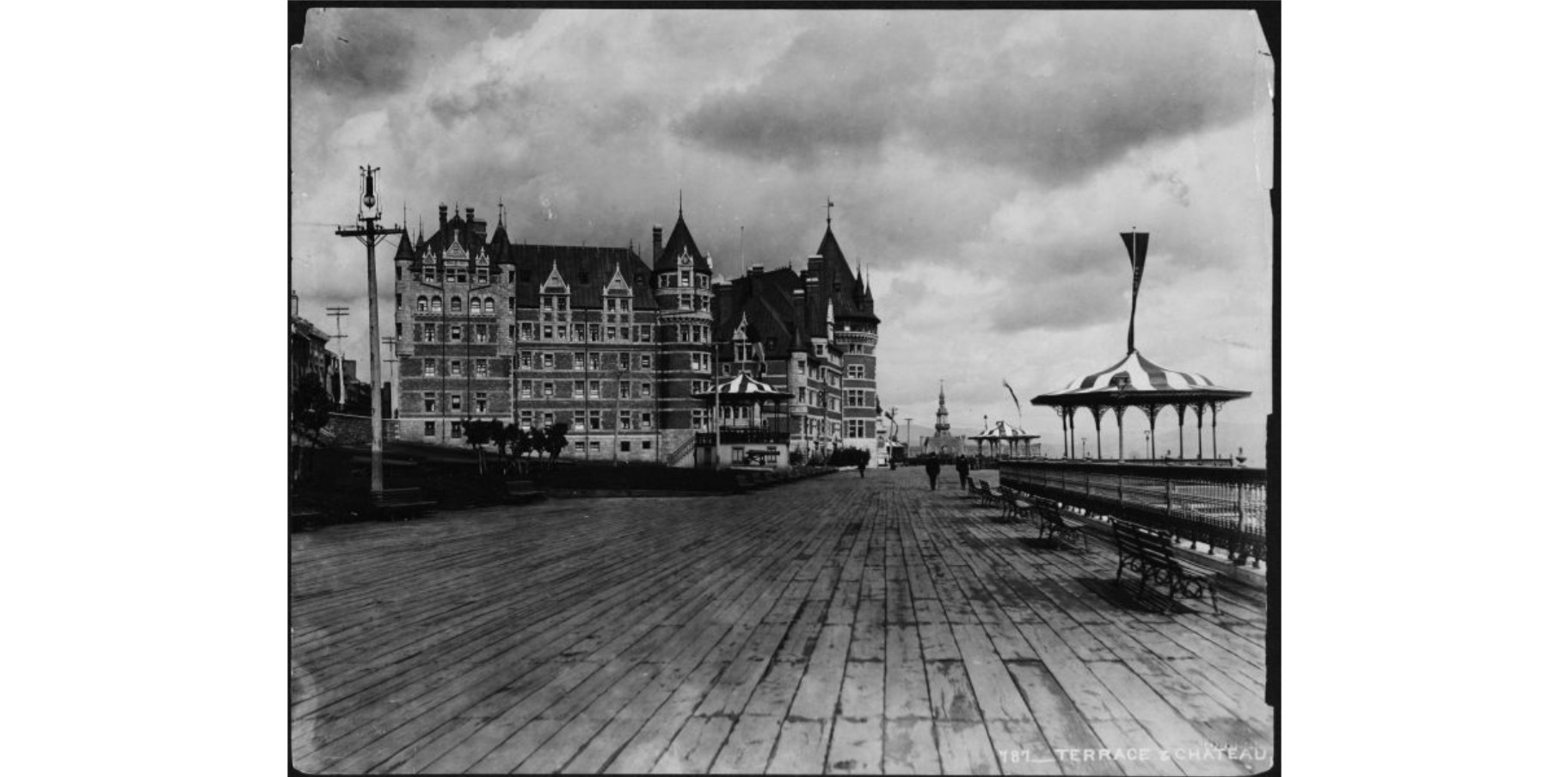
Being close to the river, Lower Town became a commercial centre. Meanwhile, Upper Town was home to administrative and religious institutions. The Saint-Louis Forts were built in 1620, on the site of what is now the Dufferin Terrace, in front of the Château Frontenac. Champlain had the fort built to protect the Québec City trading post from attack by other European powers vying for the colony.
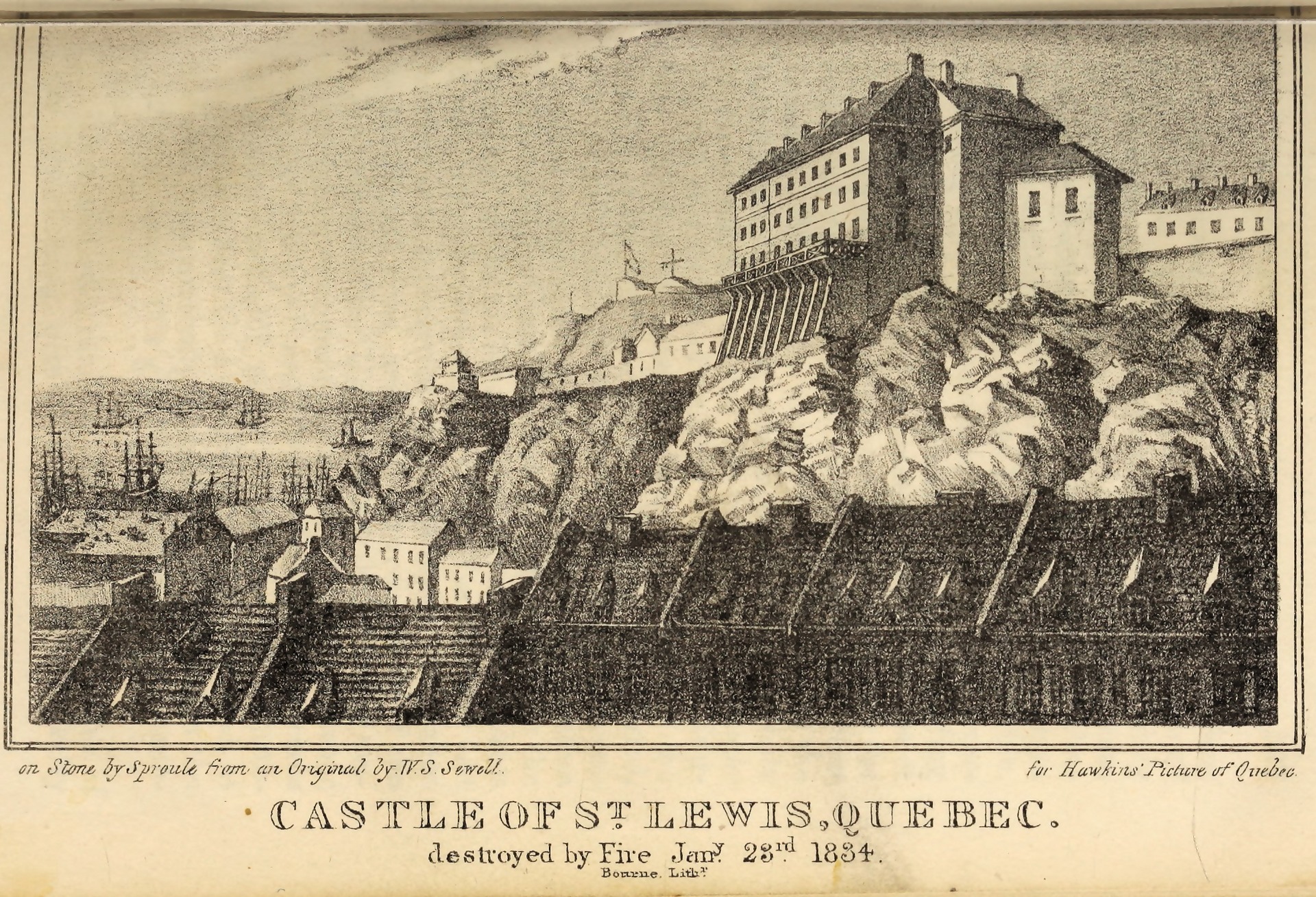
For most of its history, Québec City has been a capital city. Since Canada was formed in 1867, it has been the capital of the province of Quebec. It is home to the government and public administration.
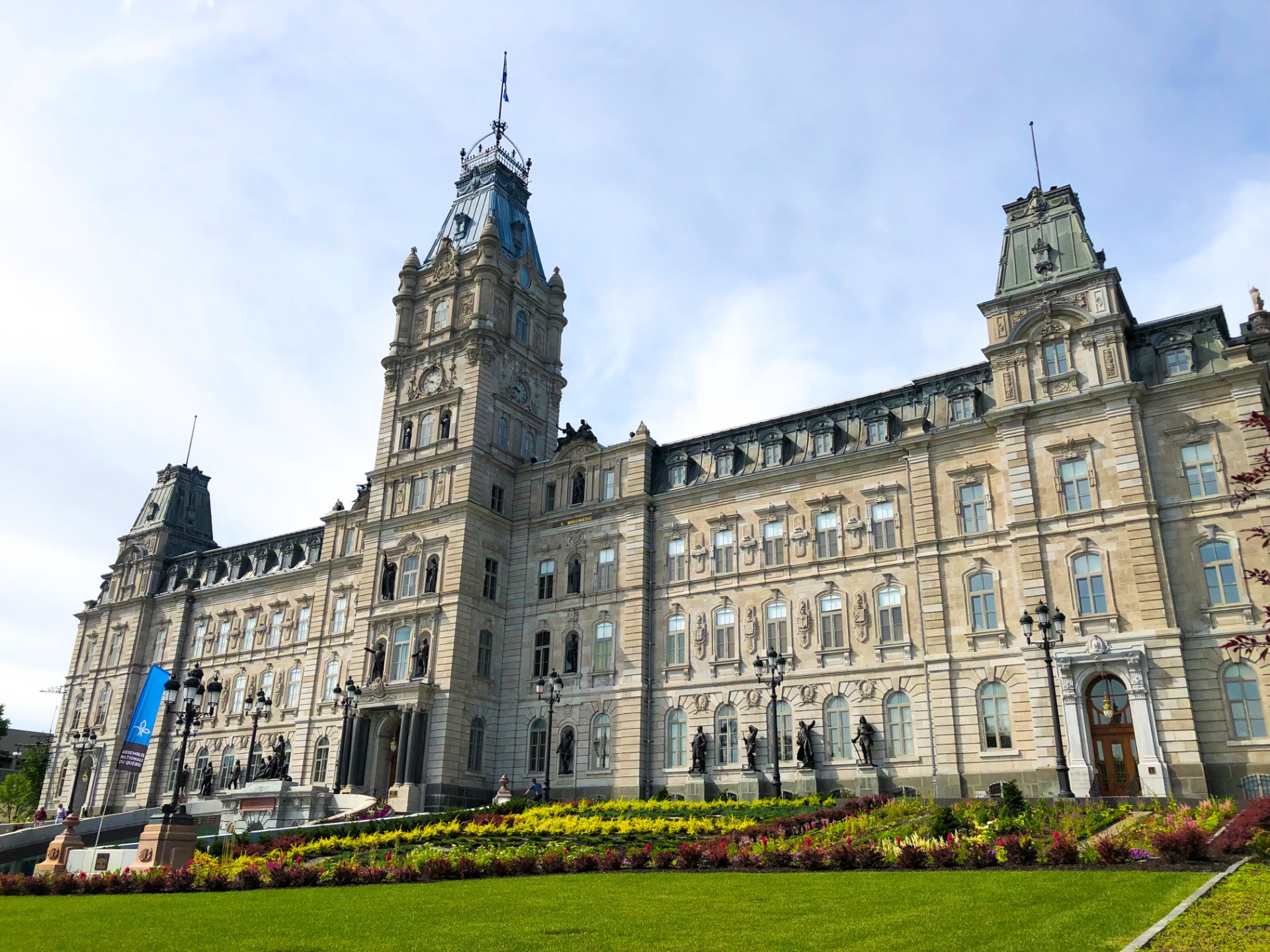
Parliament Hill, where you are now, is the seat of provincial power. The nearby Parliament building (4) is an imposing building inspired by the Louvre in Paris. Built between 1877 and 1886, the Parliament building is adorned with 26 bronze statues depicting key figures in Quebec and North American history.
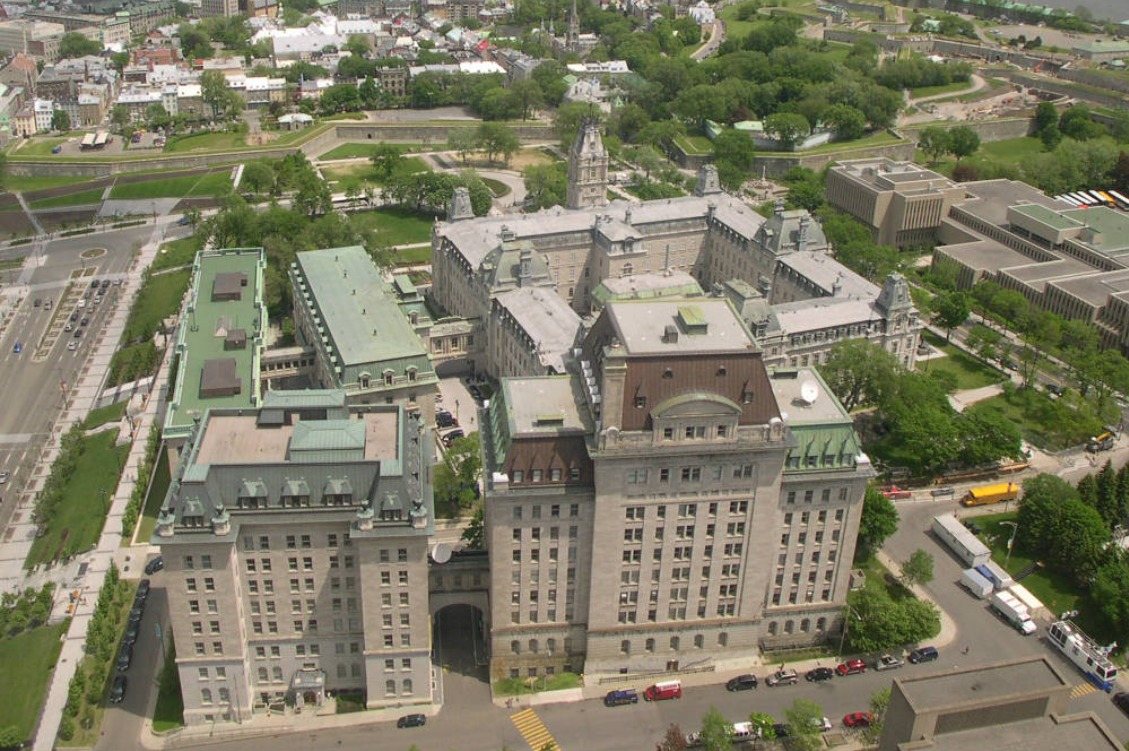
In the first half of the 20th century, four Beaux-Arts-style buildings were added around the Parliament to house the public service. You can see them from here, just below the Observatory.
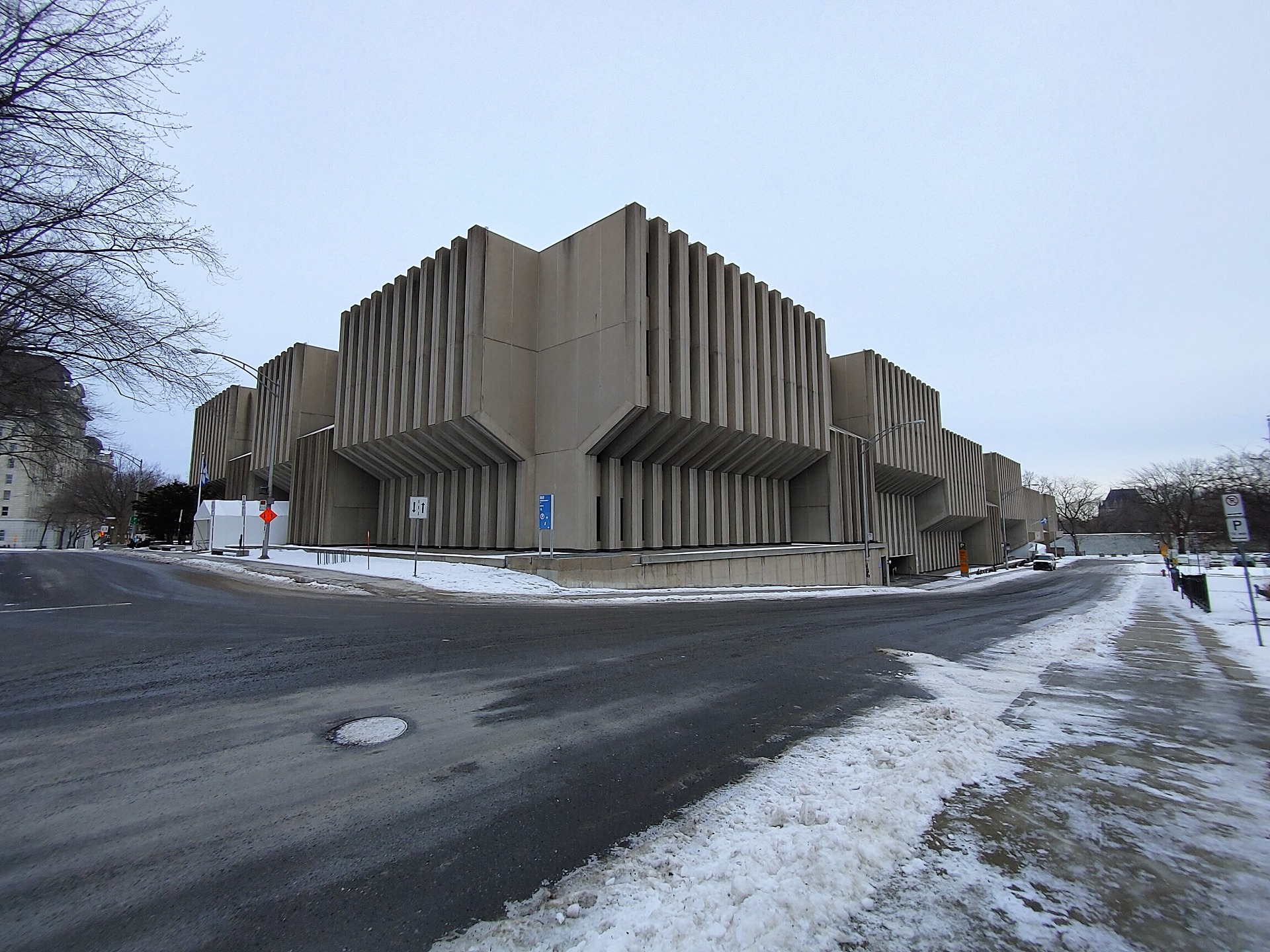
In the 1960s, the Marie-Guyart Building, where you are now, and the Jean-Talon Building (5), visible to the right of Parliament, were added. Their Brutalist style contrasts with the classicism of the other buildings. To this day, their modern design divides opinion.
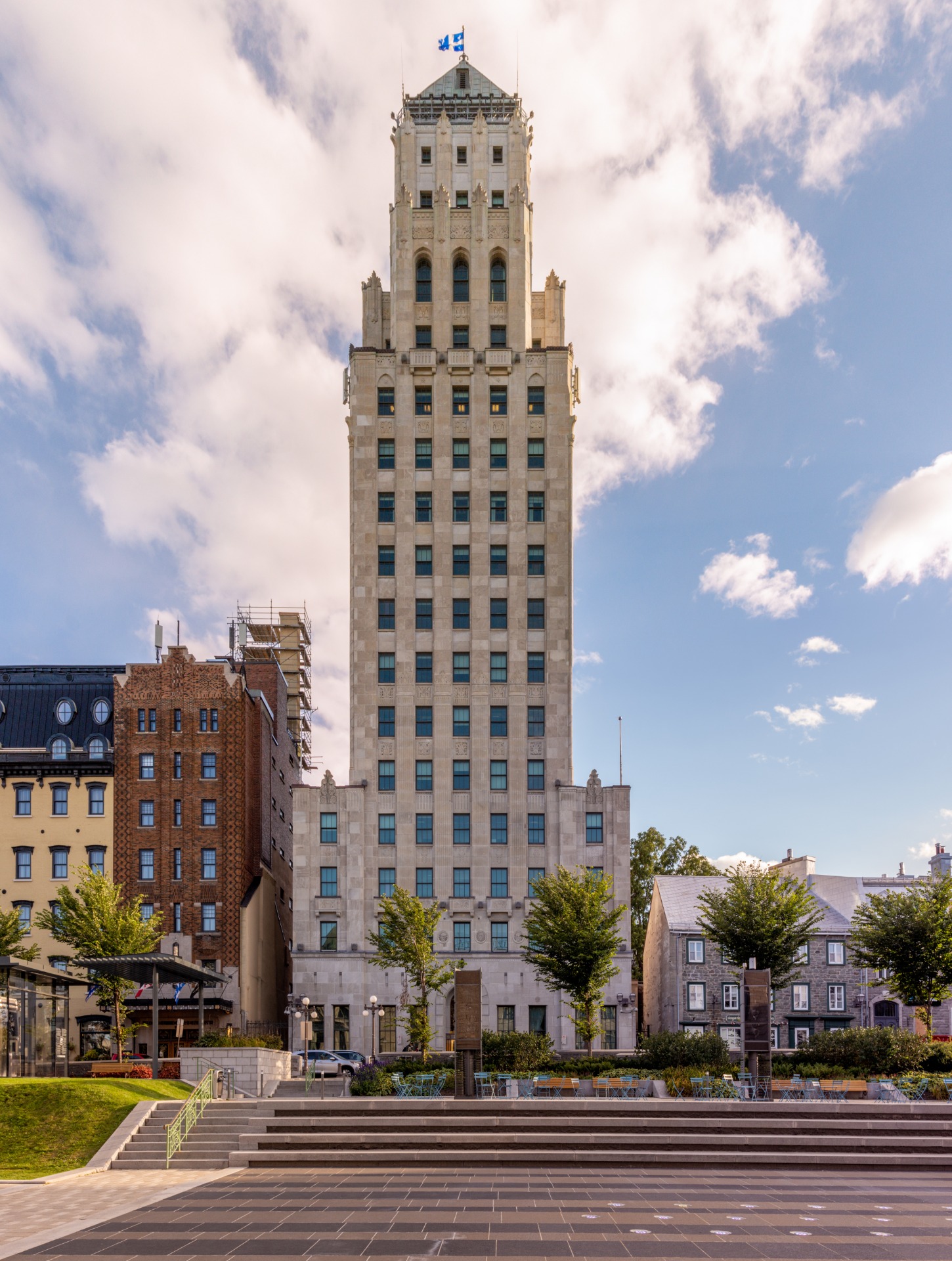
Another landmark is the Price Building (6), an Art Deco building that has been the official residence of the premier of Quebec since 2001. It is the only skyscraper within the walls of Old Québec City.
As the capital city, Québec City had a defensive system as early as the 17th century to protect it from attack. After the Conquest, the British strengthened this defensive system. The wide stone ramparts (7) that you see from here are part of this system. You can see them across from the Parliament Building and extend all the way to the Citadel (8), the hub of the fortifications. The Citadel’s star shape can be seen clearly from the Observatory. It was built between 1820 and 1850.
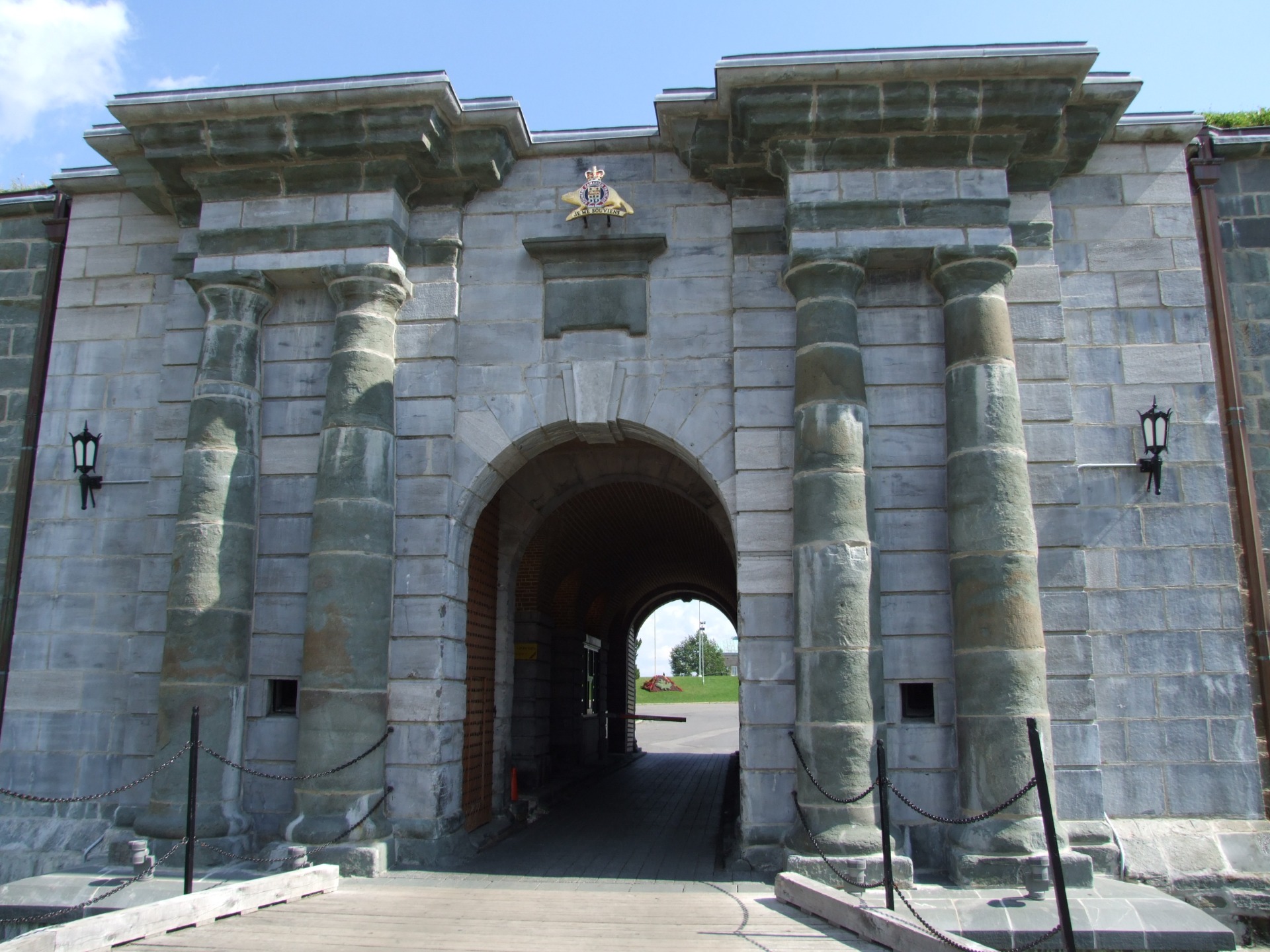
The ramparts hold many architectural treasures. These include the Dalhousie Gate (9), the only gate in the fortifications that has not been widened over the years.
After Confederation and the departure of the British in 1871, Québec City residents wanted to demolish the fortifications. But Lord Dufferin, who became governor general in 1872, stepped in to preserve them. Today, this heritage gem is an integral part of Old Québec City, which was designated a UNESCO World Heritage site in 1985.
There’s so much more to say about the eastern side of Québec City! It’s a real treasure-trove of history and heritage.
To explore this fascinating area in greater depth, click on the additional information at the bottom of the page.
Want to learn more about eastern side of the city? Click on the topics that interest you!
Different ways to explore Québec City
Spotlight on history
Find the locations mentioned in the audio guide on our personalized Google map and continue the adventure after your visit to the Observatoire de la Capitale!
Contenu GoogleMaps externe bloqué
Pour voir le contenu de GoogleMaps, vous devez consentir au stockage de cookies tiers et au traitement des données par GoogleMaps. Consultez notre Politique de confidentialité pour plus d'informations.